Cross-Examination Performance of Conversational AI Systems
AI dominates debate preparation but struggles when opponents respond unpredictably.
Cross-examination is the phase of a debate round where preparation meets improvisation, and improvisation usually wins. This article examines how conversational AI systems perform across that phase, as questioners, as respondents, and as judges. The conclusion is specific: AI is strong at generating pressure, weak at adapting to the unexpected, and more reliable as an evaluator than as a participant when its criteria are transparent.
Why cross-examination is the most demanding phase of a debate round
Cross-examination is the only phase of a debate round where a debater cannot prepare exact words in advance. Every question depends on what the opponent said moments before, and every answer must hold up under questions designed to break it apart. Cross-ex demands real-time listening, rapid inference, and controlled questioning pressure, all at once.
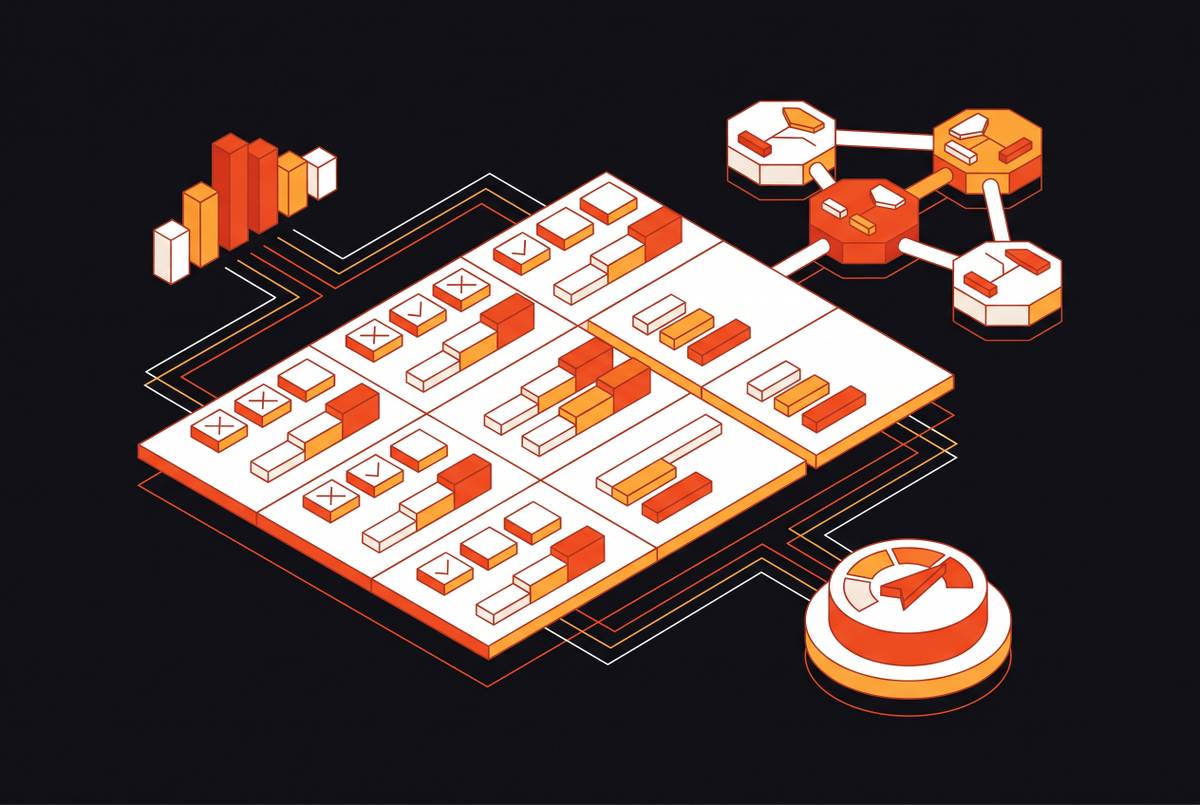
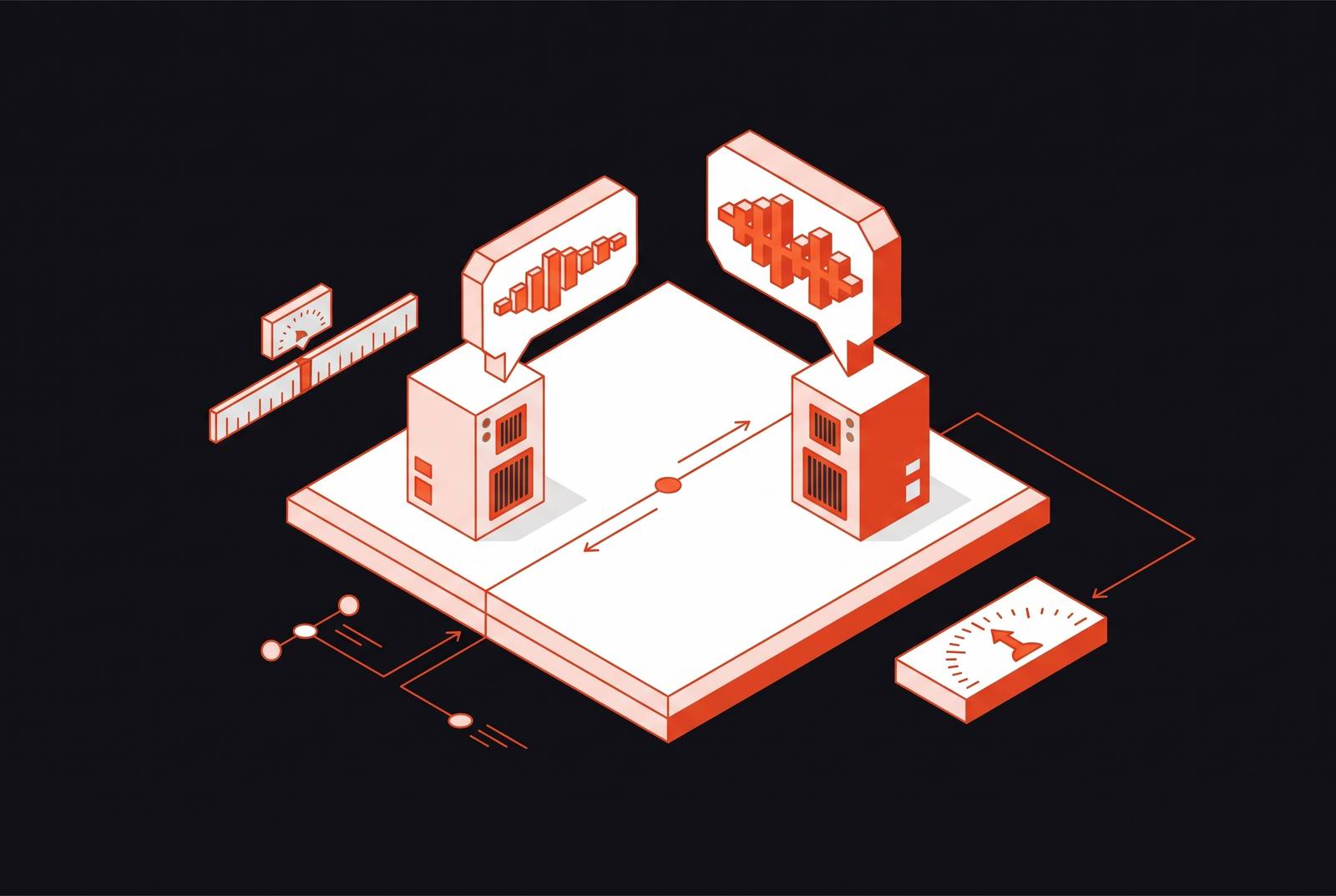
The format carries a strategic logic that distinguishes it from every other phase. DeepDebater, presented at AAAI 2026, models cross-ex as a two-agent dialogue simulating strategic question-and-answer exchanges, entirely separate from the speech generation pipeline. That architectural choice reflects a discipline-wide truth: cross-ex is a different cognitive task than speechmaking, and systems that treat it as one fail at the other.
Professional cross-examiners converge on a small set of structural rules. They use closed-ended, leading questions. The four-step attack sequence internalized by experienced debaters follows. Confirm, or lock in what the opponent said. Narrow, or identify the limiting condition. Expose, or reveal the gap. And Land, or name the weakness explicitly.
The phase is not incidental. A full policy debate round includes four cross-examinations alongside eight speech rounds. If a format devotes a third of its interactive structure to this phase, then how AI systems handle it is a genuinely revealing test of their capabilities, not a side note.
What AI systems actually do during cross-examination
AI systems approach cross-examination through fundamentally different mechanisms depending on whether they are generating questions, answering them, or doing both. To generate questions, it converts opponent claims into structured traps. Answer generation draws on transcript context and evidence retrieval. Each mechanism has distinct strengths and failure modes that preview the evaluative claims later in this piece.
On the question-generation side, AI debate generators can convert any opponent claim into a yes/no trap question that forces concessions on definitions, thresholds, unintended consequences, or alternatives. They do this quickly and at scale, producing structured output that treats cross-ex as a preparation artifact. A debater feeds in a case, and the system returns a pro/con breakdown with rebuttals, closing statements, and a list of cross-examination questions ready to deploy against a specific opponent position.
PracticeDebate.ai extends this into live performance. Its AI opponent conducts cross-examination with strategic questioning in real-time voice interaction, not merely as a preparation text delivered before the round. A question bank helps a debater prepare to ask. A live questioner pressures a debater to answer.
On the answer-generation side, DeepDebater provides the complete preceding transcript as context before each subsequent speech. Cross-examinations are handled by a separate, simpler two-agent conversational workflow. This means responses are informed by the full exchange rather than only the last question asked, which supports consistency across a round. The system's hierarchical multi-agent architecture runs a Generator, Retriever, and Critic loop, iterated until the Reviewer Agent is satisfied. That loop is powerful for evidence retrieval, but it introduces latency that a real-time cross-ex questioner would notice and exploit.
The adversarial structure also functions as a truth-finding mechanism. A system that makes false claims will lose when challenged by an opponent actively fact-checking it. Cross-ex, in other words, applies pressure that rewards accuracy, and AI systems are now being placed under exactly that pressure.
Where AI cross-examination genuinely works
AI systems perform cross-examination tasks that human debaters find difficult or time-consuming, and in several of those tasks they perform at or above tournament-competitive level. The strengths cluster around three areas: evidence retrieval under pressure, strategic question generation at scale, and consistency under hostile questioning. At scale, AI can generate dozens of targeted yes/no trap questions from a single opponent argument. Junia's AI debate generator operationalizes this by advising users to convert opponent claims into cross-ex traps targeting definitions, thresholds, unintended consequences, and alternatives. The tactical patterns mirror what the best human questioners do, but the machine executes the generation step in seconds.
Consistency and composure represent a second genuine advantage. AI does not get rattled under a hostile questioner, does not lose composure, and does not let a confident tone mislead it. It responds to the logical content of a question rather than the social pressure around it. That experiential realism is high enough to make the system useful as a training opponent.
As a practice partner, AI offers something no human sparring partner can match. A debater preparing for a tournament at midnight does not need to coordinate schedules with a teammate. The trade-offs of this availability, however, are structural, and the same architecture that produces these strengths also constrains what AI can do in the live phase.
Where AI cross-examination still falls short
The same architectural features that give AI systems their cross-ex strengths also limit their ability to do what experienced cross-examiners do best: adapt in real time to unexpected answers. Evidence retrieval pipelines, structured output, and consistent tone are assets in preparation. They become liabilities in the live exchange.
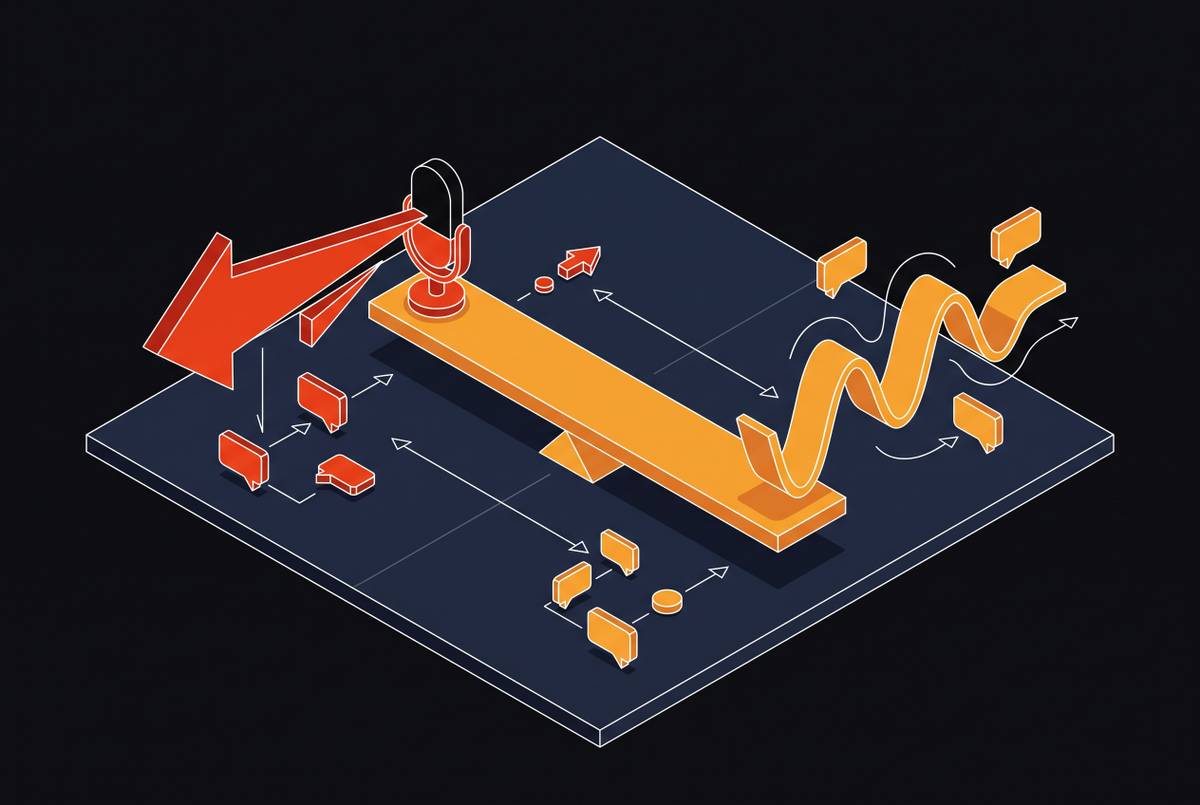
The adaptation gap is the central limitation. Cross-ex advantage comes from pouncing on the unexpected answer, the moment an opponent says something that contradicts an earlier position or concedes more than intended. If drilling cross-ex against an AI opponent does not improve the skill of responding under pressure, the most valuable part of the exercise is not being captured.
Hallucination risk is the most severe vulnerability in the answer-generation mode. In cross-ex, citing a fabricated source is immediately exploitable by an opponent who simply asks to see it. The NSDA's formal AI policy for 2025 to 2026 requires that the original source of any AI-surfaced evidence be available if requested. That rule exists precisely because AI citation reliability cannot be assumed, and it imposes a constraint that any debater relying on AI-generated evidence ignores at real competitive risk.
Finally, there is a dependency risk for student debaters. Research tracking high school students found that unrestricted AI use during practice improved performance during the AI-assisted phase, but produced measurably worse performance on subsequent unassisted assessment compared to students who never used AI. The lesson is stark: how AI is used in cross-ex practice determines whether it builds the skill or erodes it.
How AI judging handles the cross-examination phase
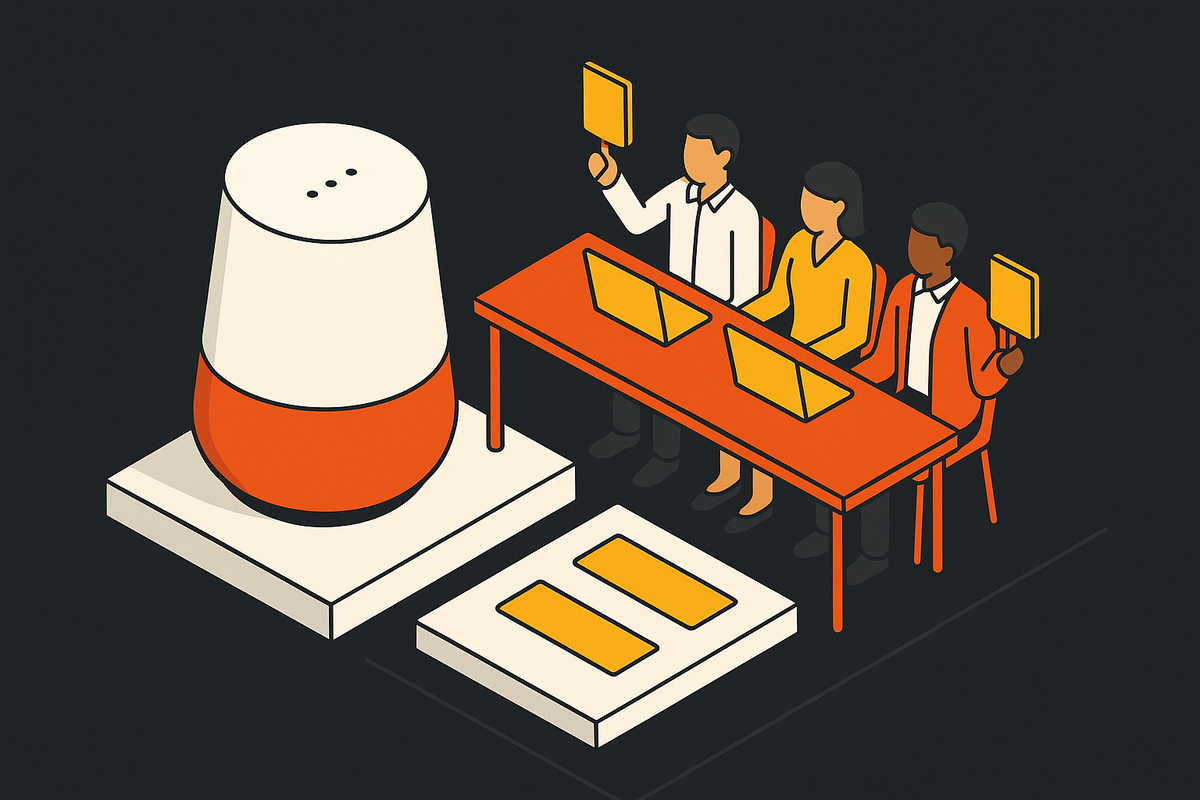
AI judging of cross-examination is a different problem than AI performance in cross-ex, and there are structural reasons to think judging is more tractable, though not without its own consistency and bias risks. The core insight behind AI-judged debate is that judging an argument is often easier than generating one. Evaluating which side's cross-ex was more effective is a comparison task, not an improvisation task, and AI systems are comparatively better at the former.
What AI judges evaluate in cross-ex follows a consistent pattern. Clarity and relevance are weighted higher in early rounds, while persuasiveness carries more weight in final rounds. DeepDebater's judge agent, powered by Claude or Gemini, reviews the complete transcript and renders a written Reason for Decision, separately from the debate-generation pipeline. The judge does not compete. It adjudicates, and its separation from the generation side is a deliberate design choice.
Consistency and fairness mechanisms address the most obvious concern with AI judging. Good consistency is observed across multiple judge models, though the risk of AI judge bias remains a documented concern. Panel voting, where models from different labs vote independently and every vote is recorded, limits the influence of any single model's tendencies on the final verdict. Transparency is the critical design variable. When scoring criteria are fixed and published before the round begins, the judge's decision can be checked against what was actually said rather than against an opaque standard. For a debater practicing cross-ex, the feedback from an AI judge is only as useful as the judge's criteria are transparent and consistent.
How to practice cross-examination with AI systems effectively
The research on skill transfer suggests a clear principle: use AI to generate pressure and questions, but do the answering and adapting yourself, out loud, in real time, under timed conditions. The goal is to build the live skill, not to outsource it to a system that cannot reproduce it. The most effective drill structure starts with an AI system generating the cross-ex questions it would ask against a given case, targeting definitions, thresholds, evidence sources, and unintended consequences. Then the debater answers them out loud, on a timer, into a recording device. Typing does not build the same skill, because cross-ex is a spoken, timed performance. Review the recording afterward to identify where the answers hedged, went long, or failed to hold a commitment. Those are the same moves a skilled human cross-examiner would exploit.
Choosing the right mode depends on the skill being built. For question generation and case analysis, AI debate generators that produce cross-ex question sets from structured case inputs work well, and their output functions best as a question bank to drill from. For full-round cross-ex practice with real-time voice interaction, PracticeDebate.ai supports speaking aloud, asking and answering questions during cross-ex, and receiving professional judging feedback trained on NSDA standards, covering Lincoln-Douglas, Public Forum, Policy, and Parliamentary formats.
The guided-hints model is the best AI practice structure for durable skill transfer. Students who used an AI that provided hints and guided thinking rather than direct answers showed improvement that transferred to unassisted performance. Applied to cross-ex, this means prompting the AI to ask leading questions about the debater's own case, rather than asking it to answer cross-ex questions on the debater's behalf. The distinction sounds minor, but the research indicates it is the difference between exercising the skill and watching it atrophy.
Finally, effective AI-generated cross-ex questions require a well-specified motion. Region, timeframe, and definition of "winning" must be built into the prompt. A vague topic produces vague traps. A tight motion produces the kind of narrow, testable commitments that cross-ex is designed to expose.
What cross-ex performance reveals about the broader role of AI in debate
Cross-examination performance is a diagnostic. Where AI systems succeed and fail in cross-ex maps almost exactly onto where they succeed and fail in debate practice more broadly. Understanding that map makes debaters better users of these tools, and the map points in one consistent direction.
The adversarial structure does work that single-advisor AI cannot. Debate consistently outperforms single-advisor AI consultancy at improving human judgment accuracy by 4 to 10 percent. The reason is that the back-and-forth of cross-ex forces claims to survive opposition rather than mere assertion. A false claim cracks under skilled questioning. A true one usually holds. This is why cross-ex is not a peripheral feature of AI debate systems but a structural requirement for their validity as training environments.
The skills that AI cannot develop are precisely the ones cross-ex uniquely trains. AI can write a speech, but it cannot debate for a student in real time. It cannot ask probing questions of an unexpected answer, produce high-quality rebuttals on the fly, or read hesitation in an opponent's voice. Live cross-ex practice remains an irreducibly human performance. This is why access to quality cross-ex practice, against real opponents with transparent judging, matters. The students who get it regularly develop judgment that AI-assisted preparation alone does not produce.
The access argument cuts both ways. AI as a cross-ex training partner democratizes preparation that was previously available only to students at well-resourced schools with experienced coaches. But it delivers on that promise only if the practice is structured to build real skill, not to provide answers the debater should be finding independently. The honest summary of current AI cross-ex capability is this: strong at generating pressure, weak at adapting to the unexpected, reliable at consistent judging when criteria are transparent, and best used as a component of a practice habit that includes live human opponents and real scored rounds. The next step is not to read more about the tools. It is to enter a judged round where the cross-ex pressure is real, and find out what holds.