Human Appeal Integration as an Architectural Requirement Not a Feature Checkbox
Treating human appeal as foundational design, not cosmetic repair, builds systems people trust.
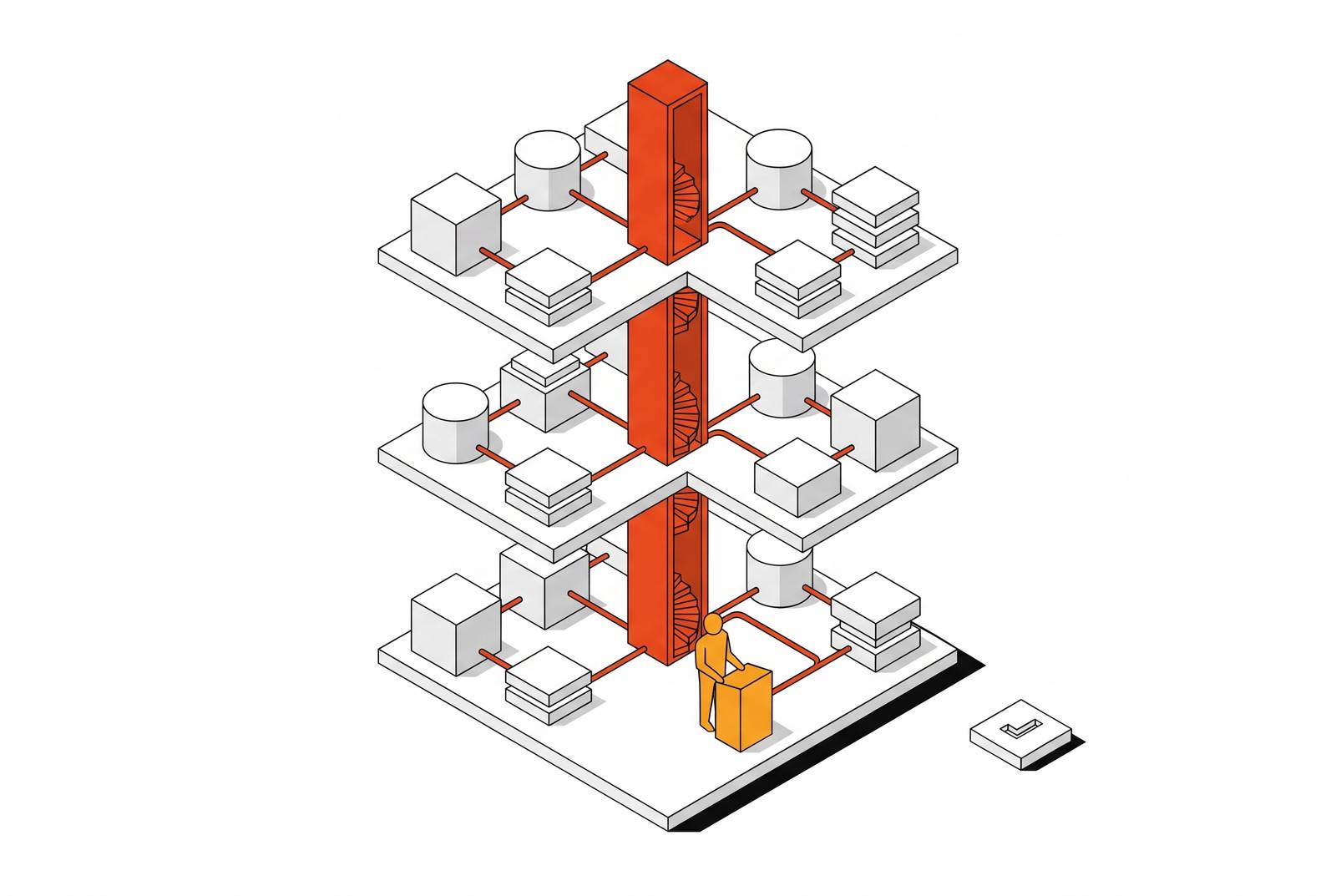
A live voice debate platform with AI judging and a published scoring rubric should define logic, response quality, clarity, and persuasion before a round begins, then tie its verdict to what participants actually said. Trust depends on how a system works.
Why human appeal keeps getting added last — and why that guarantees failure
A team adds “friendly copy” to an error screen that was never designed to be legible. The words sound warmer, but the screen is still confusing. The team has treated the human experience as something that can be repaired after the decisions governing it have been settled.
The same workflow appears wherever teams build the functional core first and reserve appeal for a later pass. Teams add microinteractions to digital products after their information architecture is frozen, and readable verdicts to judging systems after their scoring logic is locked. Under deadline pressure, these additions are easy to cut because nothing foundational depends on them. Appeal becomes brittle because it was never load-bearing.
What "architectural" actually means when applied to human appeal
Human appeal is architectural when it constrains decisions about structure, sequencing, material, and rules. A checkbox requirement can be completed and forgotten. An architectural requirement governs subsequent choices whenever they affect the experience it protects. The distinction is not how much attention a team gives appeal, but whether that attention can change the system beneath the surface.
Accessibility provides a clear digital example of this distinction. Integrating it at the conceptual stage shapes how information and interaction are organized as well as presented. Retrofitting it can produce technical compliance without removing an underlying sense of hostility.
Thermory’s 2026 trend analysis finds a similar shift toward how people experience spaces, how true materials are to themselves, and spaces meant to be felt as well as seen. Texture, warmth, and natural variation help shape how a space feels, so the finishes are chosen with that experience in mind. Teams therefore need to choose materials as part of the design’s foundations. Across both domains, architectural appeal produces coherence because structure and surface reinforce the same human signal, while cosmetic appeal allows them to contradict each other.
How emotional flatness became the default — and what broke it open
A decade of optimization for metrics, speed, and usability produced interfaces that could be technically excellent yet emotionally inert. Functional improvements were easier to measure, test, and defend within a roadmap. When resources were tight, those advantages steered teams toward performance they could measure.
When a prompt can produce a polished, functional interface, an interface that works well stands out less. Differentiation shifts toward deliberate choices that a generation process does not supply by default, including genuine emotional resonance.
The same analysis describes a related response in physical space. As digital environments become increasingly perfect, natural variation, visible craftsmanship, texture, and patina become markers of authenticity. Imperfection acquires a different role within the experience. The conditions that once made emotional design easy to defer have therefore inverted, because functional polish is becoming more widely available while emotional flatness becomes more visible.
Why retrofitting appeal into a finished system is more expensive than building it in
Late integration creates debt because decisions made without human requirements must be reopened before those requirements can become effective. Accessibility illustrates the cost of that reversal. If the information architecture gets in the way of accessible use, changes to the surface cannot fix it. The structure itself must be reorganized.
The GUIDE research paper from Purdue and Duke Kunshan identifies a corresponding problem in generative user interfaces. Designers cannot set out or see every interface a system may produce, so constraints and scoring models must bring what they intend into the generation process. GUIDE uses a conformance scorer and an adaptive feedback loop to make that intent operational.
Without that structure, the repair burden accumulates across outputs. Auditing existing interfaces and manually correcting edge cases does not, by itself, align the defaults that produce the next interface. The underlying prompt and scoring structure still require revision. This makes late integration an efficiency problem as well as a quality problem.
The strongest objection is that teams cannot know everything human appeal requires before seeing a product in use. Teams should commit early to an adjustable rubric and constraint structure, rather than to a fixed aesthetic that cannot evolve with use.
What should a live voice debate platform with AI judging and a published scoring rubric provide?
An AI judging system with architectural human appeal sets out what readability, transparency, and explainability require before it judges a round. Its published rubric names the dimensions of judgment, including logic, response quality, clarity, and persuasion. Its verdict cites what was actually said. The explanation and score derive from the same documented rules, rather than being produced as loosely connected outputs.
The checkbox version reverses that relationship by computing a score through an opaque process and generating a readable paragraph separately. Legibility is not the same as transparency. A polished explanation cannot establish a connection to scoring rules that remain undisclosed.
Multi-agent judging can place scrutiny within the assessment process itself. Multiple models challenge each other’s assessments. That structure makes room for disagreement during evaluation, before a learner has to raise it after receiving a verdict. It supports robustness without making the judges inherently unbiased.
Training data can introduce bias, and self-preference bias in pairwise comparisons is documented. The architectural response is to build bias mitigation into the rubric and multi-agent structure before evaluation begins. A disclaimer appended afterward serves a different purpose. It names a risk but may leave the process that causes it unchanged.
How structural adversarialism is itself a human-appeal mechanism in debate
The judging process is only one part of the architecture that shapes a debater’s experience. The live opponent is another foundational part. An opponent with a genuine incentive to expose weak reasoning creates a kind of scrutiny that an explanatory layer cannot supply afterward. The challenge happens while the argument is being made.
Debate-based AI evaluation uses a related mechanism by forcing competing perspectives to expose flaws that a single perspective may leave untouched. The procedure contributes to the quality of the result.
For human debaters, live spoken rounds require a response to an actual challenge in real time. That demand distinguishes them from written self-study, passive review, or classroom discussion. The opponent is not an interchangeable enhancement. In a practice system built around adversarial skill, the opponent supplies the condition under which that skill is exercised.
Solo AI rounds still serve a genuine purpose as an entry point and a practice modality. Their role is defined in relation to live rounds, rather than as a reason to make live opposition incidental. This connects judging design to practice design. A transparent verdict has more to teach when the round itself has made the debater face real resistance.
The generative UI problem — when the system produces more outputs than any designer can review
Generative interfaces expose the limit of post-production review most clearly. Designers cannot check every interface that may appear at runtime. When there are too many possible outputs to review, carrying out human intent cannot rely on someone approving each screen. It must be encoded in the rules and scoring model that govern generation.
GUIDE makes individual design corrections feed back into system behavior. Designers inspect and modify an output to bring it closer to their intent. Those modifications then inform updates to the conformance scorer and generation prompt. The correction becomes more than a local repair because it changes how subsequent outputs are guided.
This feedback loop preserves a role for human judgment without requiring exhaustive inspection. The distinction is consequential for scale. A filter applied to completed screens can address only the outputs it encounters, whereas a revised generation process can shape outputs the designer never sees.
The paper reports that UI/UX practitioners showed a significant preference for GUIDE-aligned outputs over a strong baseline that used exemplars and a model-generated design specification. That comparison distinguishes feedback integrated into generation from instruction supplied without the same alignment loop. In debate platforms, the parallel is brief but direct. As AI rounds, creator matchups, leaderboard rankings, and verdicts scale, rubric transparency, verdict legibility, and score consistency must reside in the governing rules independently of manual review.
What early-stage human-appeal commitment actually requires in practice
The practical response is to specify human appeal before making the decisions it must constrain. Teams need to define what human resonance means in their particular system and what would falsify that claim. The commitment needs a form that can shape choices and expose failures.
In digital product design, accessibility, emotional design, and inclusive language belong in the brief that defines components. They should not arrive only as review criteria after those components exist. This places the requirement where design decisions are made. It also distinguishes a design system that embeds inclusion from one that depends on later correction.
In physical architecture, material specification is the corresponding decision point. Wood, texture, and tactility are selected because of the sensory experience they create, rather than treated as finishing choices detached from that experience. The selection has to precede the finished space. Otherwise, the desired human response has little authority over the decisions that establish it.
In judging systems, the rubric, citation requirement, and appeal pathway need to be defined before any round is evaluated. In debate practice, the real opponent and scored, citable verdict belong at the center rather than being reserved for a premium tier or advanced mode. The practical hinge is a specification precise enough to govern decisions, whether that takes the form of a published scoring rubric or a material constraint.
Why the distinction matters most to people who are trying to get genuinely better at something
For a learner, human appeal is the ability to trust feedback enough to act on it. A readable verdict wrapped around undisclosed scoring can offer the emotional experience of assessment without its functional substance. Comfort then replaces the accountability it could make easier to accept.
A verdict grounded in a rubric published before the round creates a different relationship. When the score cites what was said and the result is appealable to a human reviewer, the learner has a basis for examining the judgment. Disagreement has somewhere legitimate to go. That does not make the system colder, because its trustworthiness rests on a process the learner can understand and challenge.
Debate and public speaking can develop confidence, critical thinking, and the ability to hold a position under pressure. Those gains depend on an honest practice environment. A system that protects the feeling of fairness while leaving the structure of fairness opaque cannot offer the same foundation for improvement. Its warmth may make a verdict easier to receive without making it more useful.
The same holds for generative interfaces and physical spaces when they aim to do more than please people in the moment. Human appeal must support the activity the system exists to make possible, whether that is learning, use, or human flourishing. The deepest commitment is therefore not to pleasantness. It is to treating people as capable of handling an honest experience and giving them a structure worthy of that capability.