Verdict Legibility Under Time Pressure as the Decisive Architecture Test for Live AI Debate Judges
AI debate judges need verdicts readable in seconds, interrogated in minutes, and auditable forever.

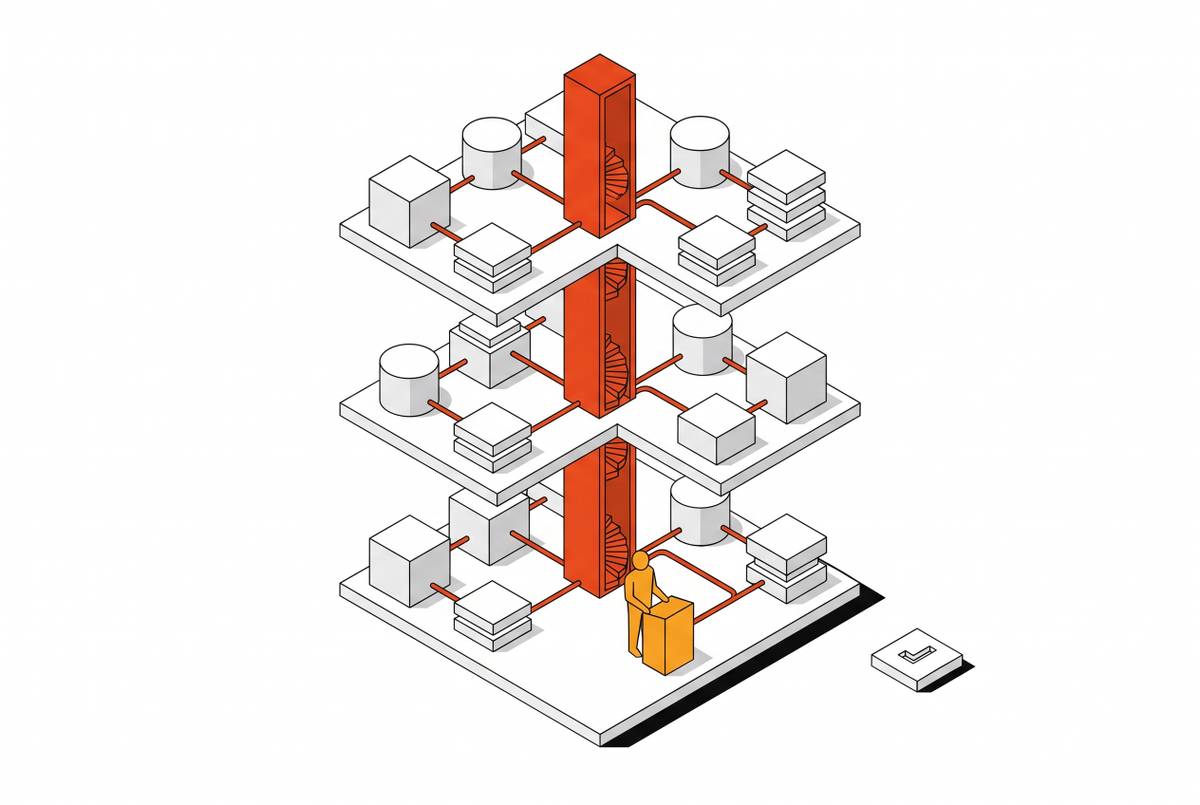
A live voice debate platform with AI judging and a published scoring rubric should deliver a verdict that can be absorbed in two seconds, interrogated in thirty, and studied for growth. That requires three layers, which are the score, sub-scores, and written reason for decision.
Why a verdict that cannot be read quickly is no verdict at all
The final speech ends, and the debater waits. The effort of speaking has not yet subsided, but attention has already narrowed to the result. There are roughly two seconds in which the verdict must answer the immediate question of who won. A paragraph that makes the speaker search for that answer takes more time than the interface has.
The next question arrives almost as quickly. Once the result is clear, the debater wants to know where points were lost and which part of the performance decided the round. Later, when the emotional temperature drops, that diagnostic interest becomes a different demand for an explanation of what to change. These are separate reading tasks. A verdict that serves only one leaves the others unanswered.
A score alone satisfies result-hunger but provides no account of the decision. An essay alone may explain the decision but bury both the result and the weakness that decided the round. Combining everything into undifferentiated prose transfers the work of sorting the verdict to the person least ready to do it.
What the three-layer structure is and what each layer does
The first layer is the aggregate score. “Pro wins 88–62” gives the outcome without requiring further reading. The second layer breaks performance into dimensions such as logic, clash, clarity, and persuasion. It gives the reader a diagnostic entry point, such as a six-point deficit on clash, rather than requiring them to infer a weakness from the aggregate.
The third layer is the written reason for decision, or RFD. This is the deliberate, reviewable account of which argument decided the round and why. It connects the dimension named in the scorecard to the substance of the speeches. The RFD explains which opposing argument went unanswered and why that omission outweighed other contributions.
The deciding issue must be explicit. A close or tied aggregate can still yield a winner, so the written account must explain the call. Sub-scores need the aggregate as their anchor, and the RFD needs the sub-scores to indicate where a reader should look first.
Does the platform publish its scoring rubric before the round begins?
The sub-score layer becomes defensible only when its rules are visible before the speeches begin. Otherwise, the debater receives a retroactive judgment without an agreed basis for disputing it. Published weights make a narrower, testable claim possible. The judge’s application of the stated rubric can then be tested independently of how reasonable its explanation sounds after the result is known.
One documented rubric weights reasoning most heavily, followed by clash and weighing at equal weight, then clarity, with strategy and persuasion each at 10%. Its persuasion constraint is unusually important. Persuasion may resolve a substantive tie but must not reward charm, confidence, volume, pace, fluency, accent, dialect, vocabulary, or polish. This separates the force of an argument from the appeal of its delivery. Stating that boundary in advance gives debaters a rule against which to challenge a verdict.
Publishing the rule makes departures identifiable and gives an audit something concrete to test. Stanford HAI says useful legal AI transparency requires institutions to make it easy to find out how well a system works and where it fails. That provides an analogy for debate judging. In debate judging, legibility must be built into the rules and their evaluation before scoring.
The credulity problem: what happens when the judge cannot resist a well-constructed argument
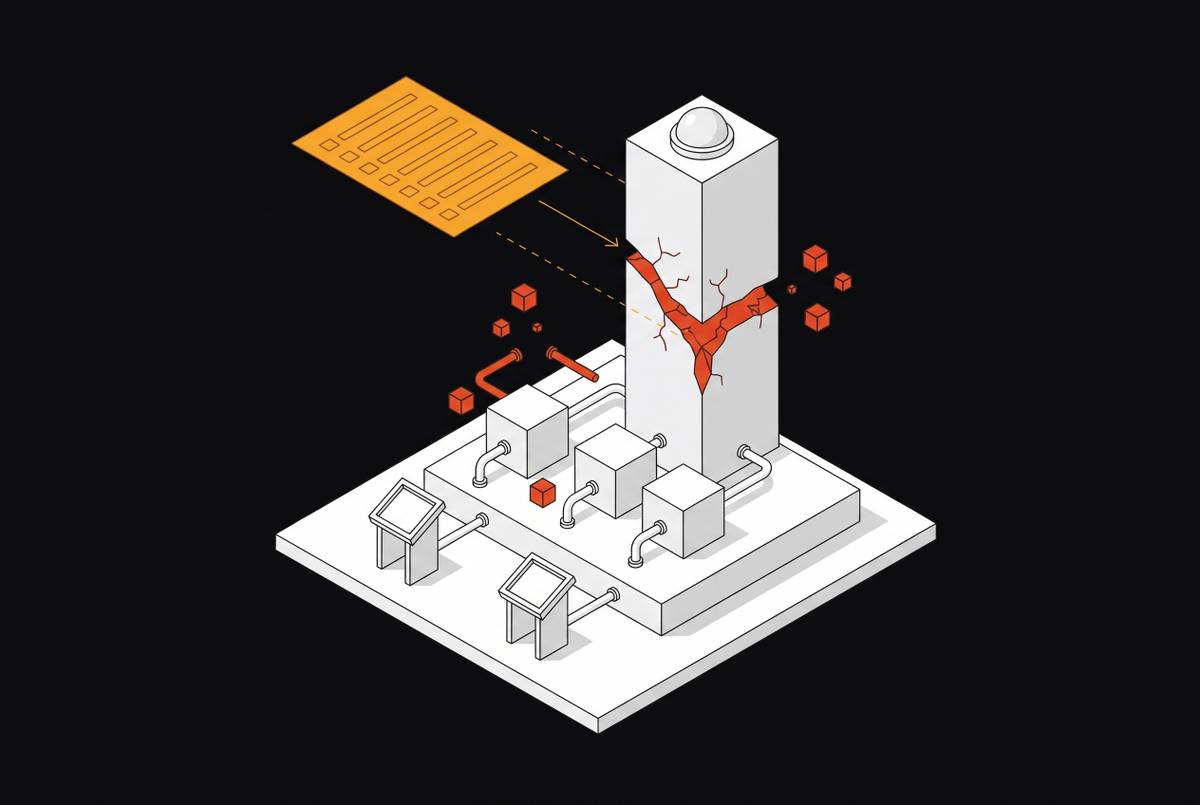
A readable verdict can still be wrong. The strongest objection to this architecture is that a model may populate every layer coherently while rewarding a plausible argument that lacks factual grounding. Clean sub-scores do not prevent that error. A fluent RFD may also hide the error, because its explanation may favor form over substance just as the score did.
Carro et al.’s October 2026 preprint, arXiv:2610.28539, presents a relevant asymmetry between human and weaker AI judges. Its abstract reports that debate increases accuracy for human judges, while weaker language models show mixed results, with no comparable gains in most settings and reduced accuracy in some. The finding is still preliminary and has yet to be peer-reviewed. The supplied notes say peer review is still underway, though the abstract does not say where it stands. Even so, this has serious implications, because debate cannot be counted on to correct a weaker model’s first judgment.
A credulous judge risks substituting internal coherence for factual support. A judge that endorses plausible-sounding arguments can reward construction rather than substance, even when its output is perfectly legible. The format calls for adversarial testing. Tests must probe padding, repetition, and persuasive framing that add no argument. A panel of independently scoring models also distributes the risk through aggregation, although it does not establish that the panel is immune to a shared error.
How consistency and adaptability trade off under live-round time pressure
Consistency is the strongest reason to use AI judging in live rounds. When the same rubric governs successive rounds, a six-point deficit on clash in one round can mean the same thing as that deficit in another. That continuity makes the sub-score layer useful beyond an isolated result. It also makes written explanations comparable, because readers can examine how the same criteria were applied to different speeches.
Human adaptability has a different strength. A human judge may spot devil’s advocacy or see why a speaker uses what looks like an inconsistency as a deliberate rhetorical device. Such interpretation takes deliberation, however, and a live round restricts the time available for it. Under that pressure, adaptation can become hard for the debater to predict. The advantage of human judgment in one setting is not automatically an advantage in the immediate post-round window.
The comparison is therefore not between universal AI superiority and human inadequacy. It is between a format that rewards immediate, structured reasoning and the time a human needs to produce that reasoning in writing. Vague comments such as “good point” offer little diagnosis, but their brevity need not reflect a lack of care. AI can produce an RFD as part of the verdict itself. Its failure to recognize an advanced device remains a classification error that the format makes inspectable.
What a bias audit looks like in practice, and why published audits are the architecture's proof of work
A published audit exposes methods as well as conclusions. That distinguishes it from a vendor’s assertion that a model is unbiased. The simplest stability test sends the exact same prompt twice and counts the system as unstable if the verdict changes. This detects random variance, but it cannot establish fairness. A system can make the same biased decision every time.
A stronger test changes one variable at a time. Pairs of speeches built for the test can show whether a longer speech earns more clarity points with the same reasoning, or whether repetition on the losing side changes the call. The panel gets inputs built to bait it as well as ordinary speeches, where agreement may hide a weakness. The audit tests whether irrelevant changes influence the score or winner.
One documented audit used 48 panel runs with one variable changed at a time. Longer speeches earned modestly more on clarity, while reasoning scores did not move and no verdict changed. Publication allows debaters and coaches to inspect the methodology, replicate the tests, and dispute the conclusions.
An audit also needs a boundary on its authority. Those runs show what happened with the changes tested, but they leave open how the judge will respond to other attempts to manipulate it. Human review provides a further route for contesting a particular result. When a verdict can be escalated, its scorecard and RFD become material for review. This is the institutional discipline behind a legible output.
How the three-layer verdict connects to skill development when reviewed after the round
After the round, the RFD becomes a coaching instrument only if it cites what was actually said. A clash sub-score shows which dimension needs work, but it does not say which response was missed. The written account supplies that specificity. It can explain which argument was dropped and why the judge gave weight to the argument that remained standing. The next practice task then follows from the speech.
Research on AI-assisted debate practice finds that students rate AI as effective for refining speeches, locating evidence, and developing arguments, while finding it least helpful for oral delivery practice. A grounded RFD fills part of that gap by letting the debater look back at what went wrong in a live round. It does not become oral delivery coaching merely because it is detailed. Its contribution is to connect a spoken performance to an identifiable argumentative consequence. A score alone cannot make that connection.
The same connection gives steelmanning a post-round test. Asking an opponent or AI for the strongest version of the opposing view before a round prepares the debater for a substantive challenge. The RFD can then show whether that argument actually decided the contest. Without that link, the debater may know they prepared but not whether they worked on the issue that decided the round.
Repeated practice makes this record more useful. An AI sparring partner available at any hour enables more rounds, and each three-layer verdict adds a development point that a human coach can review. Volume alone is not the instrument of growth. The instrument is a sequence of comparable scores, diagnostic sub-scores, and speech-grounded explanations. A public leaderboard depends on the same foundation, because its ranking is meaningful only when the scores it aggregates come from a consistent, inspectable rubric.
The audience signal as a parallel track that legibility requires keeping separate
Viewers can state their position before the round and after the ballot, while the running tally remains hidden during the debate to reduce conformity pressure. The resulting shift records changes in position. It is reported separately and never alters the scored verdict, because adding it to the score would mean that the published rubric was no longer the sole basis of judgment.
Separation also preserves the signal’s diagnostic value. When the verdict and the audience shift agree, the argument that won on points also moved the room. Divergence exposes a gap between rubric-based success and audience persuasion. This follows the same boundary as the persuasion sub-score, which may resolve a substantive tie but cannot override argument. Every design decision ultimately serves an outcome that is contestable, inspectable, and useful, distinguishing a legible instrument from a black box.