Switching Sides Mid-Round to Expose the Arguments You Never Bothered to Stress-Test
Arguing both sides aloud reveals which of your premises collapse.
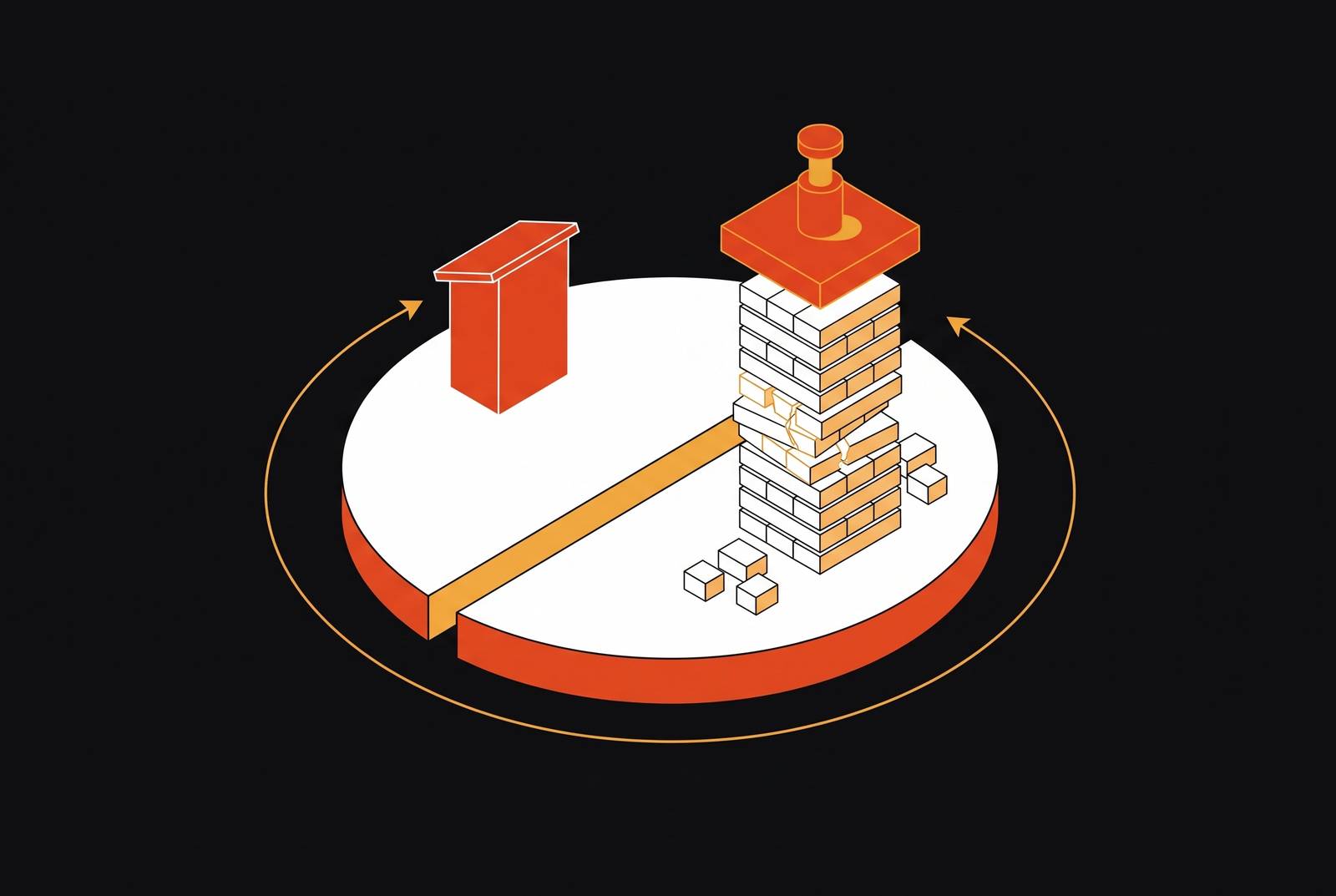
Switching sides mid-round exposes weaknesses in a debate case by requiring the opposing case to meet the same standard. For daily practice without a partner, combine this spoken drill with a solo AI debate opponent and a judged verdict. Debate AI offers voice-first practice and written ballots, while the side-switch gives the case the stress-test it needs before the scored exchange.
Why debaters instinctively protect their own case — and what that costs them
A debater enters a round feeling prepared, delivers a fluent opening, and then hears an objection for which there is no answer. The objection attacks a premise that preparation treated as settled. Familiarity has been mistaken for strength. The debater knows the reasons supporting the position and the objections already answered, but not the opposing arguments that nobody required them to build.
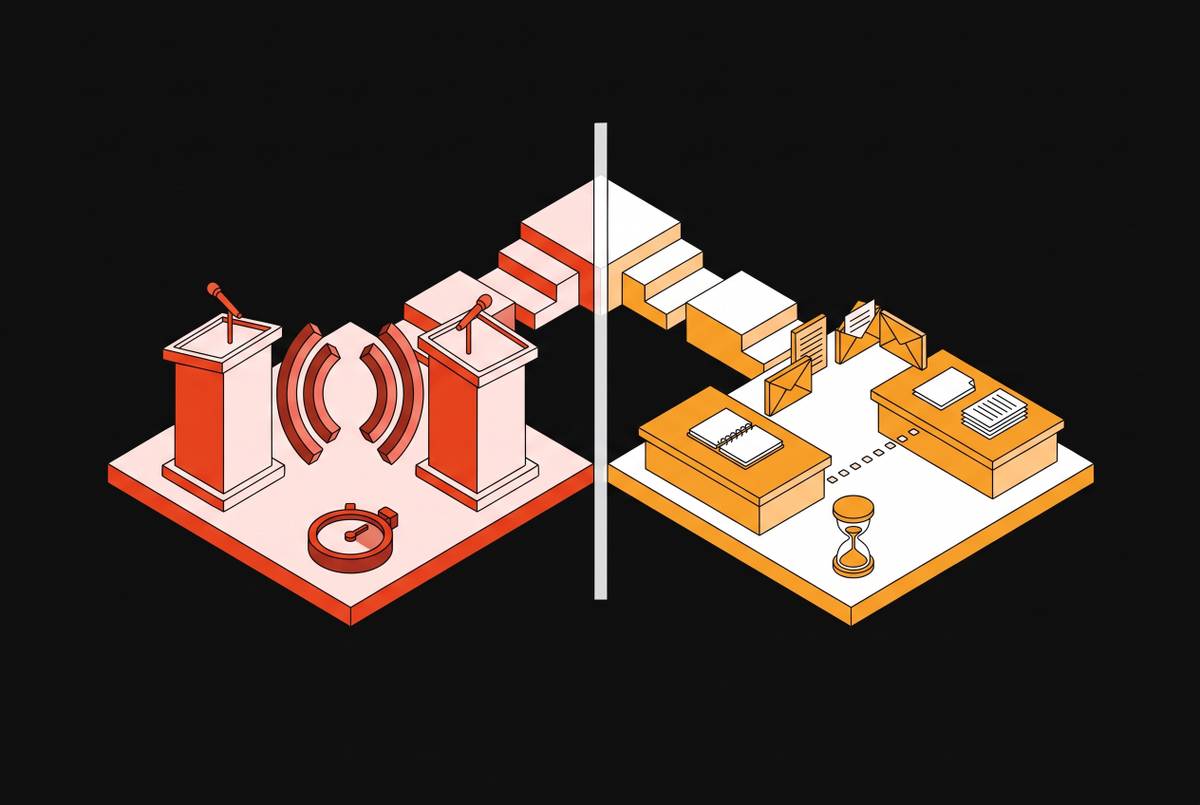
This problem arises from the structure of preparation. Preparation devoted entirely to defending one position produces one-directional understanding, even when the work is thorough. The strongest arguments become easy to say, but the assumptions behind them go untested. The side-switch changes that allocation of effort. It requires the debater to construct the case that could defeat their own, rather than merely rehearse responses to familiar challenges.
What the side-switch drill actually is, and what it is not
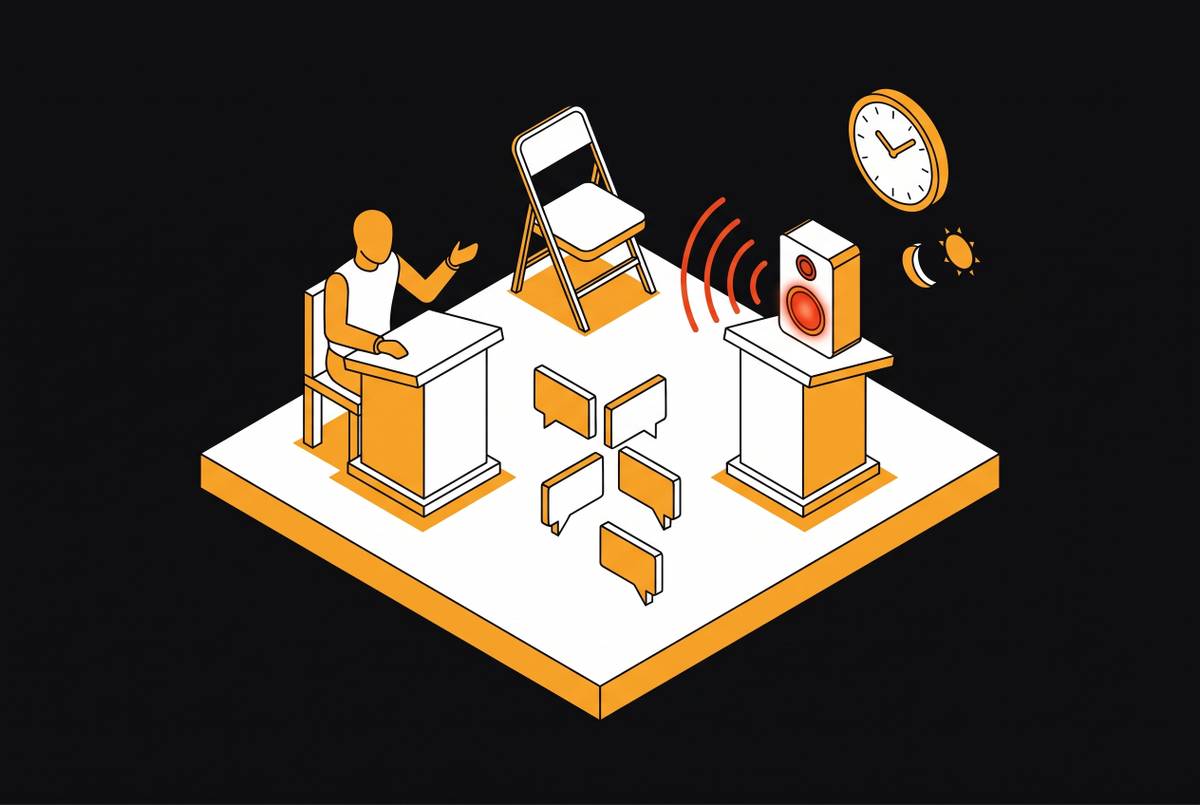
The side-switch is a timed, spoken exercise in which a debater argues one position, then switches and constructs the opposing case with comparable structure and effort. Both sides receive a full affirmative case. SuperDebate’s Side Switch drill uses equal intervals for arguing FOR and AGAINST a named resolution, such as “Should Corporations Have Constitutional Rights?” The switch can happen within a practice round.
The rule is to switch chairs while maintaining the same standards. Devil’s advocate thinking looks for a strong objection, while this drill calls for reasons to accept the other position. Thinking about both sides or writing a paragraph of counterarguments does not meet the spoken, timed requirement. A fairness audit checks whether both sides had at least two real reasons, whether their examples were equally concrete, and whether someone who holds the opposing position would see the case for it as reasonable. Giving one side developed reasons and the other a vague preference does not complete the drill.
Why building the other side out loud reveals what reading about it never does
Reading an opposing argument leaves the reader in the role of evaluator. Speaking it requires the work of an advocate. The debater must find reasons, put them in an intelligible order, anticipate objections, and continue when the case becomes difficult. That change of role exposes the distance between recognizing an argument and being able to construct it.
The difficulty becomes especially clear at the switch. After speaking for three minutes on one side, a debater must make the opposite position coherent without retreating into criticism of it. An assumption that seemed sufficient as a reader may need explanation when it becomes the foundation of a speech. A reason that sounded persuasive in isolation may prove difficult to connect to the conclusion. Construction reveals those missing links as they are needed.
Running out of reasons is useful diagnostic information. It marks where understanding or spontaneous expression stops supporting the case, rather than merely indicating an unsuccessful performance. The claim that a debater already knows what the other side would say therefore answers a different question. Knowing the outline is not the same as building it fluently under pressure, without an edit function. Spoken practice reproduces those demands of a live round in a way that reading and revision cannot.
Running the drill: a step-by-step framework for before, during, and after a round
Before a round, begin by bounding the question. State a real choice in a clear situation, rather than attempting a horizon-sized claim such as “Is technology good?” Then build Side A aloud by stating the position, giving a reason, supplying an example or condition, and adding a second reason. The structure makes each claim answerable to support. It also gives the opposing case a standard to match.
Next, make the change of role explicit. Move to another chair or stand somewhere different if possible, then build Side B with the same structure and roughly the same effort. The task is no longer to improve Side A. After speaking, run the fairness audit and identify any imbalance in reasons, examples, or specificity. An underdeveloped opposing case needs attention before its apparent weakness can be treated as a finding.
Stress-test both cases by stating the strongest fair objection to each side, especially the one the debater would least want to hear in a live round. Concede what is genuinely fair, then reply without pretending the difficulty has disappeared. A concession can narrow a claim without surrendering it. The reply must explain why the argument still supports the position after that concession.
Bo Seo’s method uses the last five minutes of prep to adopt the opposing team’s perspective, brainstorm its arguments, and identify why a judge could plausibly choose it. The next step in this targeted preparation check is to remove those pitfalls from the prepared case. After a round, the corresponding exercise is to take the objection that landed hardest and build it into a full case before trying to refute it.
Every version ends with synthesis: state the real trade-off and identify what each side must concede to defend its conclusion. Synthesis turns the two performances into a completed stress-test. For a short practice session, the Side Switch format gives each side ninety-second turns. The intervals keep the construction manageable while preserving the requirement to argue both positions.
Choosing a topic that makes the drill worth running
An obvious answer makes one side artificially easy, while an excessively broad question lets both sides avoid precision. “Technology is bad” leaves too much unspecified. By contrast, “This house would ban smartphones for students under 14 during the school day” identifies who is affected, what changes, and when. That boundary gives both cases the same decision to address.
A useful resolution also forces competing benefits into contact. A four-day workweek debate can place productivity and well-being against the difficulty of cutting hours in industries that cannot do so without reducing service. Neither side can complete the drill honestly by ignoring the other consideration. Competitive wording helps make the burden of proof clear. “This house would” identifies a policy change, “This house believes” a value claim, and “This house regrets” a retrospective judgment, so the switch tests opposing answers to the same question.
What the drill exposes: the specific weaknesses it finds that preparation alone misses
Asymmetric examples are an early warning of uneven understanding. A debater may give the preferred side a concrete example while supporting the opposing side with only a general assertion. The fairness audit makes that difference visible. It shows that the comparison has not yet been earned. One case has been constructed more fully than the other.
Saying the strongest challenge aloud forces the debater to face it now. The reply either produces an answer that can be used in competition or confirms the need for further work. A fair concession also exposes the proper scope of the argument. If the case survives only after qualification, that narrower claim is the one the debater can defend.
Both cases often have sound reasons but lack impact comparisons. Separate benefits do not explain which should decide the round when they conflict. A weighing sentence makes that comparison by conceding one point and explaining why another should count for more. The final synthesis tests whether that reasoning is actually understood. If the debater cannot name what both positions sacrifice, the speeches may reflect memorized positions.
Using a live judged round to make the drill’s findings stick
A solo drill finds weaknesses, but a round against an opponent tests whether the fixes work. An opponent need not follow the objections the debater has rehearsed, and a judge evaluates the exchange. In this way, debate practice is more like chess training than a classroom discussion. Constructing arguments is necessary, but so are opposition and a verdict.
A scored AI round gives those who train alone a way to take the next step right away. Post a motion, take a side, and bring the revised argument into an exchange with an AI opponent. Debate AI offers voice-first training in 2026 with format-accurate opponents across PF, LD, Policy, APDA, BP, WSDC, Congress, and MUN. Its AI judge provides a full ballot with speaker points for each speech, specific strengths, specific things to improve, and one drill to practice before the next round.
Tool choice should follow the practice requirement, with any “best” label tied to that requirement. For solo side-switch training, look for a tool that lets the debater speak, uses the right debate formats, and gives feedback on what was said. For live competition before an audience, Politicked offers structured debates where the audience votes in real time and the leaderboards are open to view. That serves a different practice context. An audience verdict and a written diagnostic ballot should not be treated as interchangeable forms of feedback.
The quality of judging still needs scrutiny. Useful diagnostic scoring requires rules published before the round and a decision citing the specific exchange that produced the verdict. Multiple independent models issuing verdicts, with a split panel recorded as no winner, can reduce dependence on a single model’s bias. A human reviewer available on stated appeal grounds makes the result checkable. These are criteria to verify when evaluating an AI judging system.
The written decision then directs the next debrief. It should show whether the argument that felt strong in the drill held up in the actual exchange. If the fixed argument still failed, the debater can use the next side-switch to build the objection that beat it into a full case.
How can you make side-switch practice a daily habit without a partner?
The side-switch works best as a standing pre-round habit. Reserving it for disappointing results leaves ordinary preparation vulnerable to the same one-sidedness that caused the problem. A short timed interval per side on a named resolution makes the exercise small enough to repeat. The stress-test and synthesis preserve its purpose. Duration alone does not distinguish a useful switch from two unexamined speeches.
A seven-day progression gives the habit a practical setting. Day 1 uses a one-minute unscripted opinion, and Day 2 develops a structured argument with a point, reason, example, and returning point. The side-switch fits on Day 3. Day 4 adds a recorded two-minute opening, followed on Day 5 by three rebuttals without personal attacks. Day 6 introduces a short debate with a friend or AI opponent, and Day 7 uses a full three-minute speech with an opening, arguments, rebuttal, and conclusion. From Day 6 onward, the switch can serve as the standard warm-up.
Over weeks and months, repeated switching expands the range of opposing cases a debater has already built and tested. The benefit is not merely a smoother answer in the next round, but fewer arguments encountered for the first time under competitive pressure. That work does not require a well-funded team or a coach. A judged platform can extend the practice, but it is not a prerequisite for beginning. The first switch requires only a topic, a timer, and the decision to give the other side equal effort.