How Serious Competitors Fill the Coaching Gap With an Always-Available AI Opponent
An AI opponent gives debaters daily judged reps, not a substitute for human rounds.
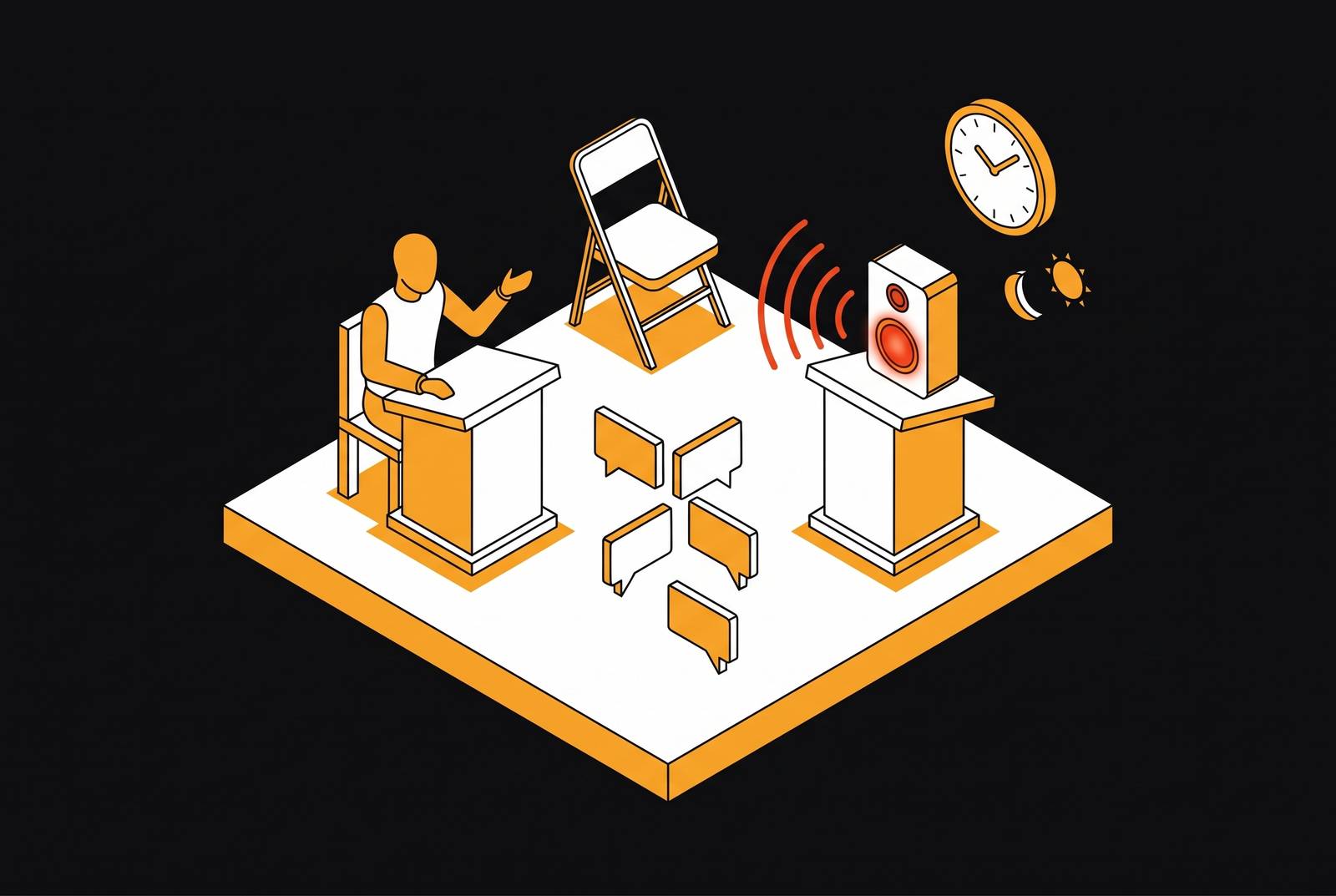
A solo AI debate opponent for daily practice without a partner is useful when it holds a position, argues back, and supports a scored decision with reasons. Serious competitors use that combination to expand access to judged, adversarial repetitions while doing their own thinking. Spoken practice is still the main task, and human rounds test whether those repetitions help in live competition.
Why debate skill has always been rationed by human availability
Debate practice depends on several people being available at once. An opponent must argue back, a judge must decide who won, and that judge must explain the decision. Wanting to practice does not make those people available. Coaches have only so much time, partners have schedules that clash, and writing a useful ballot takes more care than listening to the speeches alone.
Funding does not fully remove that constraint. Even a well-resourced program has a finite number of coaching hours, so opportunities for individual correction remain rationed. A debater can prepare arguments alone, but preparation does not reveal which claims survive opposition or persuade an external listener. An unjudged round leaves that second question unresolved. Without a reasoned decision, confidence in an argument can persist without evidence that it won the exchange.
Self-evaluation helps, but it cannot fill every role. The speaker knows what an argument was intended to establish, while the judge must decide from what was actually communicated. Reviewing a speech can expose an omission or an unclear sentence, yet the speaker may still overlook the assumption that made the reasoning unpersuasive. External judgment interrupts that habit by identifying a deciding issue the debater did not necessarily recognize.
What deliberate practice actually requires in a spoken, adversarial format
Good practice brings together drills that work on one skill and rounds that call for several skills at once. Neither form replaces the other. A rebuttal drill concentrates on answering an argument, while a full round requires the speaker to answer, weigh competing claims, deploy evidence, and deliver the case within the format’s constraints. The comparison with chess training is useful because study alone does not supply an opponent or a score. Debate also needs an opponent who pushes back and a verdict, which talk about good technique alone cannot provide.
For practitioners, rebuttal reps make that distinction concrete. The drill begins by writing the strongest version of an argument the debater rejects, then answering it aloud under timed pressure. Building the target is part of the training. A weak version is easy to answer, but a strong one makes the debater engage with the opposition’s actual reasoning. The spoken answer then tests whether that engagement can become a clear rebuttal.
Self-recording tests a different part of the performance. A debater argues a position for three to five minutes, then plays it back to hear where the logic becomes vague. Filler words, an unchanging pace, and rushed explanations can obscure an otherwise sound argument. Strategic pauses and slower delivery for important ideas help make the reasoning audible.
Between rounds, it helps to listen back to speech recordings, give impromptu rebuttals on unfamiliar motions, and read ballots for patterns across rounds. Recordings reveal what was said, unfamiliar motions test responsiveness, and ballots show what an external listener found decisive. A full round integrates those demands and ends with an explanation of why one side won.
How can competitors practice debate every day without a partner?
An AI opponent supplies adversarial commitment without requiring another person’s schedule to align. It takes a side and defends it. That behavior distinguishes a sparring partner from a general-purpose chatbot that hedges or agrees with the user, the failure mode known as sycophancy. Agreement may make an exchange pleasant, but it removes the resistance a rebuttal drill needs.
For spoken practice, that distinction extends beyond the quality of the text produced. A written exchange does not exercise delivery. Live-round practice requires the competitor to formulate and speak an answer, manage pace, and respond within the round’s constraints. Case generation and research assistance help with other tasks, but neither gives the debater these repetitions. The bottleneck being removed is the need for an adversary to be available at the moment the debater can train.
Format support also needs a precise reading. In 2026, practice tools offer full AI rounds for Public Forum and Lincoln-Douglas, but tools for British Parliamentary and World Schools help with preparation and timing without offering full simulated rounds. A timer does not become an opponent because it supports a debate format.
An AI opponent can provide repeated resistance on demand, but that does not establish equivalence with a human competitor under every constraint. Its value is the additional practice it makes possible. A serious training system evaluates that contribution against the skills being rehearsed, rather than treating any argumentative response as a complete practice round.
How AI judging closes the feedback loop that makes repetition useful
An opponent creates resistance, but a judge identifies the consequence. A verdict delivered seconds after the final speech can connect the result to the argument while the exchange is still fresh. Its value depends on the explanation. A useful ballot cites what was actually said and applies a known rubric, allowing the debater to distinguish a failed argument from an argument that was never communicated clearly.
Comparing the ballot’s deciding issue with the argument the debater expected to win provides a practical lesson. A mismatch becomes the week’s coaching target. That comparison directs attention toward the gap between intention and reception, rather than toward defending the result the speaker wanted. It also gives the next repetition a purpose.
Consistency is the strongest design argument for AI judging. The intended standard is the same rubric across rounds, without fatigue, distraction, or deference to a charismatic speaker. Panel scoring can further limit individual outliers by using the median rather than allowing one model’s idiosyncrasy to determine the result. Dissents remain separate. Those safeguards make disagreement visible, but they do not prove that the underlying judgments are unbiased.
LetsArg’s creator documented that limitation in a practitioner-run AI tournament. The final speaker had a meaningfully higher win rate regardless of side, suggesting susceptibility to closing arguments as a systemic LLM feature. The finding warrants scrutiny. AI judges can also inherit training-data biases or penalize unconventional arguments that do not fit a familiar template. Rigorous judging design therefore requires scoring criteria published before the round and openness about observed biases, because a rubric supplied afterward can rationalize a result.
Where AI practice accelerates skill and where human competition remains irreplaceable
AI opponents work best for the many practice rounds that are hard to arrange when other people have to be free. They can supply rebuttal reps on unfamiliar motions, repeated attempts at the same motion, and isolated work on weighing or evidence deployment. The repetition need not exhaust a partner’s patience. Where spoken practice and judging are supported, immediate feedback can also address delivery and argument structure.
A live opponent makes new choices and brings social stakes and the pressure of facing another person who is trying to win. Cross-examination makes the distinction especially clear. Reading a person’s uncertainty or hesitation is not the same task as answering a generated challenge. An AI simulator can support rehearsal without reproducing the full interpersonal dynamic of the exchange.
DebateCardAI’s 2026 guidance draws a related boundary between assistance and substitution. AI should make preparation faster without replacing the skills that make someone a good debater. Treating output as finished work crosses that boundary. In practice, the opponent model preserves the competitor’s task because the human must still construct and deliver the response. A shortcut that supplies the response removes the very work the practice is meant to develop.
The appropriate cadence therefore retains a judged human round every week or two, with a reason given for the decision. AI supplies additional repetitions between those encounters. That division preserves human competition as a test of integration while making component work less dependent on access to a coach or teammate. Improvement in an AI setting remains preparation for that test, where the competitor must demonstrate mastery of its pressure and unpredictability.
How to build a practice stack that uses an AI opponent as the daily rep engine
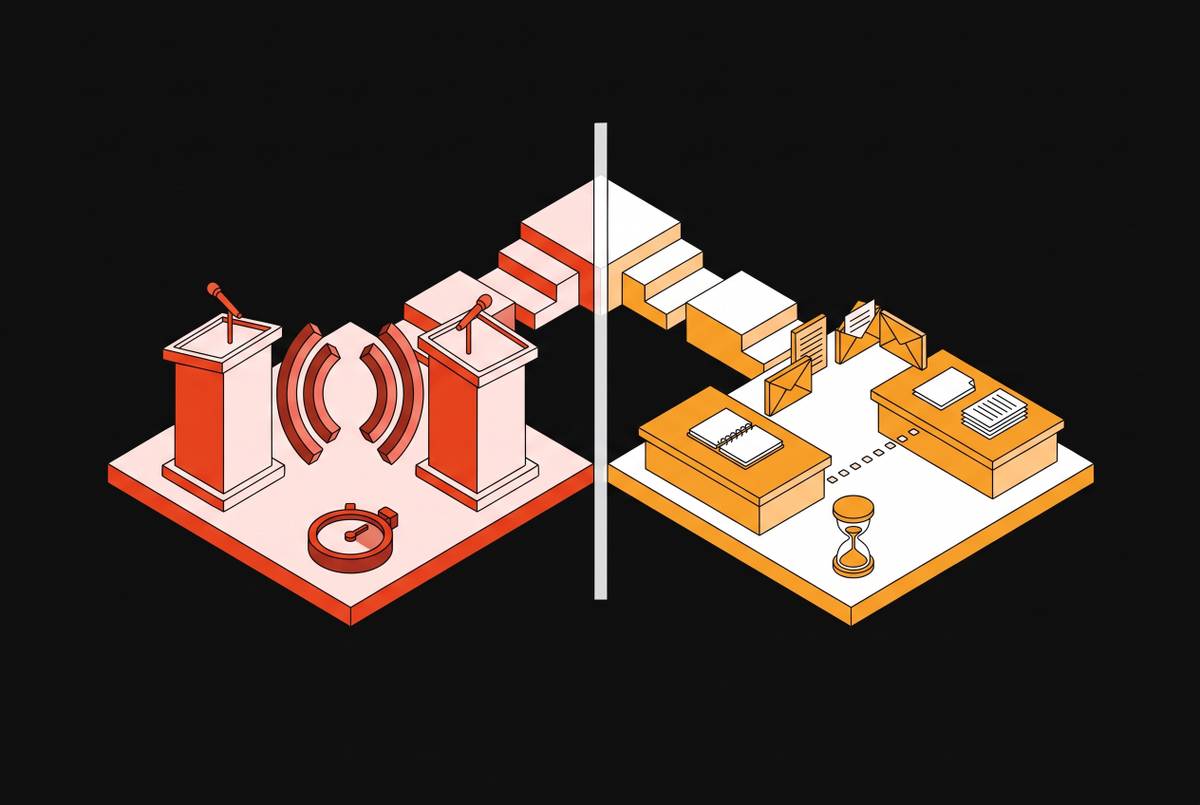
The practical response is a three-layer stack of solo AI practice for volume, live human rounds for integration, and judge feedback for diagnosis. The first layer supports frequent, focused work. One-minute openings on fresh motions, rebuttals against the strongest opposing case, and recorded delivery runs give those sessions a clear task. Full rounds then combine the components.
The choice of tool should depend on the task being practiced. Debate Ladder has ranked voice practice, while ArguFight has written debates. They are not interchangeable for a spoken-practice goal. Prilo NSDA offers an AI sparring partner for rebuttals, a three-minute cross-examination simulator, flowing drills, and CardCut for Lincoln-Douglas, Public Forum, and Policy formats.
Argument mapping has a separate supporting role. Kialo Edu suits understanding argument structure. Access terms also differ across these tools. The 2026 offerings include free base debating on ArguFight and 100 free credits for new Debate Ladder accounts. Kialo Edu states that it is free and always will be, which makes its role as a structural aid distinct from a trial allowance.
In DebateOwl’s 2026 offering, the full app has a 3-day free trial followed by a low monthly fee. Its timer, motion generator, flow sheet, and speech-time calculator are separately free without an account. Those tools support practice logistics. They do not, by themselves, supply the adversary and reasoned verdict that define a judged repetition.
The second layer retains scheduled human competition. A full, judged round every week or two gives the debater a place to integrate the skills rehearsed alone, with more repetitions behind the performance. Streamer and community formats can extend that layer through leaderboard-ranked live matchups. Competitive pressure has a place in the stack. It belongs in encounters that genuinely supply it, rather than in claims that solo practice reproduces every tournament condition.
The diagnostic layer calls for reading feedback from several rounds to find weaknesses that keep coming up, instead of reading each ballot as a decision on its own. That habit helps the debater choose a next drill that works on a problem that keeps coming up. Steel-manning the opposition belongs throughout the process because a strong target demands a substantive answer. Access to that work need not depend entirely on school budget or team size. For a competitor in a well-funded program or one training alone, the long-term gain is not only better debate performance but the habit of engaging the strongest version of disagreement beyond any tournament.