Transcript Citation Requirements in AI Verdict Writing
Verdicts that cite speeches, not impressions, let debaters check the scoring.
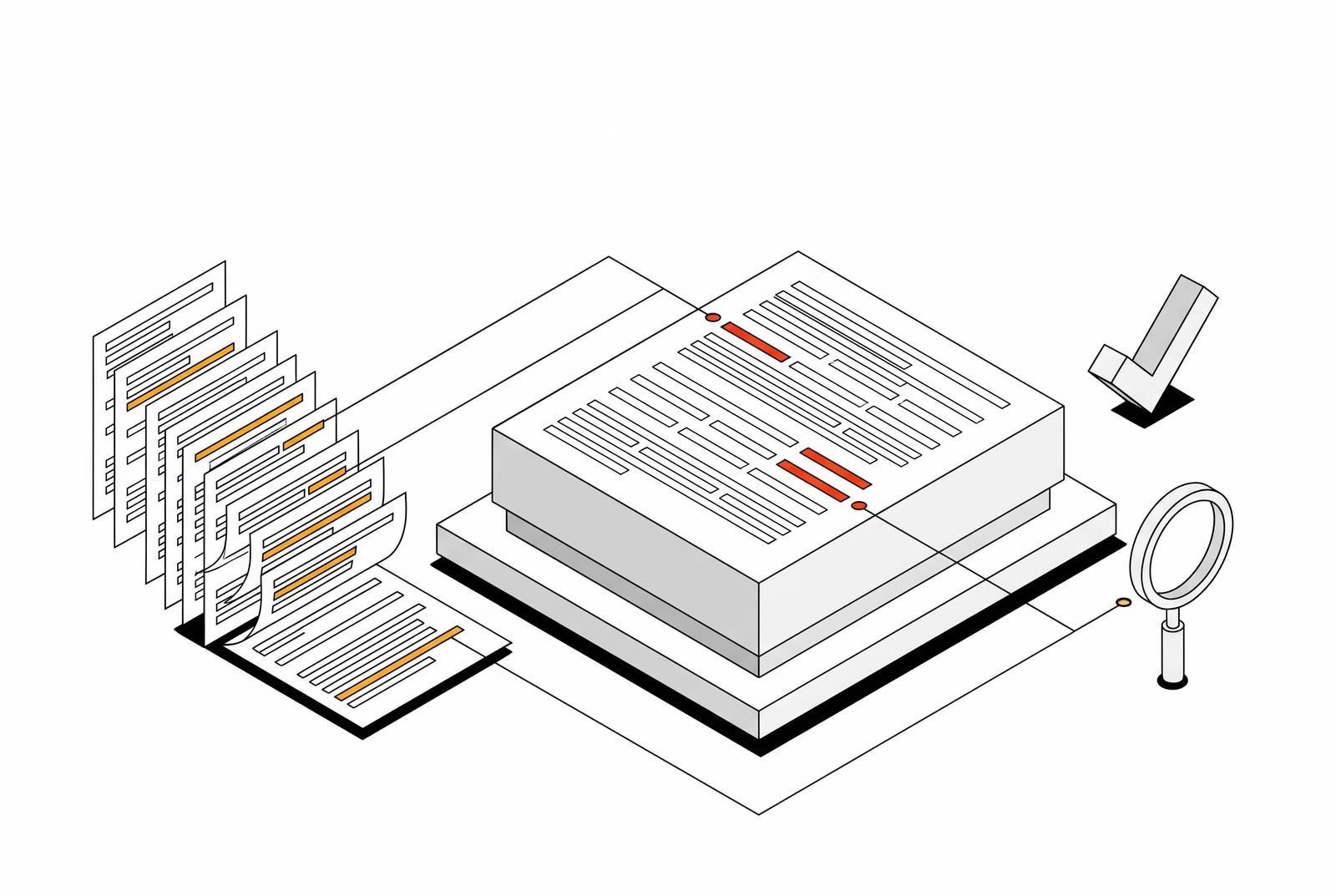
A live voice debate platform with AI judging and a published scoring rubric needs transcript-grounded verdicts to make its scores reviewable. A trustworthy verdict identifies the arguments, responses, comparisons, and scoring evidence in the round itself, so debaters can learn from the decision.
Why the source of a verdict's authority matters
A debater reads that their argument was weaker but cannot find where the verdict explains what they actually said. The score is clear. Its basis is not. Without a speech moment to inspect, the debater cannot distinguish a justified loss from a decision that misunderstood the argument. A model’s reputation does not resolve that uncertainty, because confidence in a system is not evidence for a particular judgment.
A judge who says “you lost because your argument was weaker” without pointing to a speech moment invites doubts about attention or bias. AI judging should meet the same standard. The transcript gives both sides a shared record of what was said so they can check the decision without having to rely on the judge’s account. Citation therefore does more than support an explanation. It converts an otherwise opaque output into a decision whose reasoning can be challenged at the point where it meets the evidence.
What a debate transcript contains and why it is the right evidentiary record
A transcript records what both sides said in order without deciding how much weight to give each side’s words. That separation gives it its evidentiary role. The verdict interprets the round, while the transcript supplies what that interpretation must answer to. Its neutrality comes from recording both sides under the same terms.
Chronological structure makes it possible to establish whether a claim preceded a rebuttal or appeared only afterward. Speaker attribution establishes who made each statement, preventing a verdict from crediting one side with the other’s reasoning. Near-verbatim content allows debaters to compare the judge’s characterization with the language used. Completeness supplies the context that an isolated sentence lacks. Together, these properties make the transcript a record of exchanges.
In live spoken debate, transcription error can affect how words are recorded. Citation should therefore anchor to the gist of a locatable passage rather than make an evaluation depend on exact wording that speech-to-text may have distorted. The passage still has to be identifiable. A debater’s notes select what that debater noticed, while a summary compresses the exchange through interpretation. A recording timestamp alone identifies a point in time without supplying the attributed passage and surrounding argument. None provides the same complete, directly inspectable textual record.
The four things an AI verdict must cite to be checkable
The standard has four parts because a verdict makes four kinds of claim. It identifies arguments, assesses responses, compares competing positions, and explains scores. Evidence for one does not automatically establish another. A verdict can accurately identify a contention yet still misrepresent how the opponent answered it. Each part therefore needs its own transcript anchor, even when the same passage supports more than one part.
The argument that was made requires identification by speaker and round position. The minimum form is “In the first affirmative speech, the speaker argued that…” followed by the specific claim being evaluated. Position is part of the evidence. A point introduced in an opening and the same point used in a rebuttal perform different functions. Without that location, the debater cannot establish whether the judge evaluated the original contention, a later qualification, or a reconstructed version that no speech contained.
The response or failure to respond requires a bilateral citation. At minimum, the verdict must locate the original argument and the opponent’s answer, or identify the relevant response opportunity and state that no answer was located in the transcript. Absence needs an account of the search. “You dropped argument X” is not checkable when the verdict never identifies where X appeared or which opposing speech was examined. A citation to the original contention alone proves only that the contention existed.
The comparative evaluation requires evidence from both competing claims and an explanation of what made one stronger. Its minimum form locates the relevant passages and ties the preference to reasoning actually spoken. The comparison must remain inside the round. If the verdict says one side was “more logical” without showing what either side supplied, it substitutes an assertion for an evaluation. Likewise, citing two passages without explaining how they differ leaves the decisive step unsupported.
The scoring rationale per dimension requires at least one cited moment for each criterion on each side. Logic, response quality, clarity, and persuasion each need a reason that can be traced to the transcript when they have separate scores. If a verdict cites an unanswered contention to justify response quality but gives no evidence for a clarity penalty, that penalty remains unverifiable. The minimum is one cited moment per scoring dimension per side, with an explanation of how the moment bears on the criterion.
How citation requirements change across different verdict dimensions
Logic citations must expose the structure being evaluated, including the premise, warrant, and conclusion as they appear in the transcript. A conclusion alone is not enough. If the penalty concerns a missing connection between a premise and a conclusion, the citation must locate the passage where that connection should have been established and explain the gap. Otherwise, the debater cannot tell whether the warrant was absent, broken, or simply overlooked by the verdict.
Response quality needs evidence of how one side answered the other, beyond a single argument on its own. The original claim defines what the rebuttal needed to address, while the rebuttal shows whether it did so. Both moves need to be visible. A response can sound forceful in isolation yet address a different proposition from the one advanced. At the same time, a short answer may directly challenge the warrant on which the original claim rested. Citation must make that relationship inspectable rather than treating length or apparent force as a substitute for clash.
Clarity requires a narrower claim than a general impression that the speaker was difficult to follow. The verdict must locate the passage judged unclear and explain what was difficult to identify or connect within it. Location makes the penalty actionable for the debater. It also distinguishes uncertainty about a particular argument from a judgment about the speaker’s whole performance.
Persuasion demands still more care because phrases such as “more compelling” can conceal the absence of evidence. Its citations should point to how the speaker framed the argument, which words they stressed, or how they ordered their points in the transcript and explain how those choices shaped the judgment. Those choices must belong to the speech. Grounding judgments in the speaker’s own choices makes persuasion the hardest dimension to cite precisely, even though it is often the dimension debaters most want explained.
What bad citation looks like and why it still feels like a verdict
Paraphrase without location can sound attentive while remaining uncheckable. In a hypothetical verdict, “you argued that the proposal would reduce costs” may accurately describe a contention but identify neither the opening speech nor a later rebuttal. The missing location prevents a precise comparison. The debater cannot tell whether the judge assessed the claim with the limits first placed on it or a shorter version used later.
A citation can also prove the wrong thing. Suppose a verdict penalizes that cost argument for lacking a warrant but cites only the final rebuttal, where the speaker briefly restated the conclusion. The passage may be accurately identified. Yet it cannot, by itself, establish that the constructive speech failed to explain the connection. The citation looks precise while directing attention away from the part of the round where the disputed reasoning was developed.
Asymmetric citation creates a different appearance of completeness. A hypothetical verdict might identify the affirmative’s opening contention and final answer precisely while describing the negative only as having offered “stronger objections.” Detail exists, but only on one side. The reader can inspect the affirmative’s weaknesses without inspecting the basis for the negative’s advantage. That imbalance weakens the comparison even if every cited affirmative passage is accurate.
Borrowed reasoning places the unsupported step inside an otherwise grounded explanation. For example, a verdict might cite a cost claim and then reject it using an objection that neither speaker raised. The claim has a transcript anchor. The decisive objection does not. The diagnostic test is therefore more demanding than counting references. For each evaluation, the debater should ask whether the passage is where the verdict says it is, whether it backs the judgment, and whether the same citation standard applies to both sides.
Why citation requirements also constrain how the AI must process the transcript
The need for citations shapes how the system must judge the round before it writes the verdict. A system must locate the relevant passage and preserve its relationship to the claim being judged. A remembered summary is not sufficient grounding. An internal representation may retain the topic while losing a qualification, speaker attribution, or position in the exchange. If the resulting verdict cannot return to the transcript, the debater has no way to establish whether that representation remained faithful to the round.
The order matters because arguments change as the sides answer each other. The constructive establishes a position, the rebuttal challenges it, and the final speech may narrow or defend it. Evaluation must preserve those dependencies. Treating the transcript as an undifferentiated whole risks crediting an opening argument with reasoning supplied only later or judging an early response against a claim not yet made. This is a requirement about the logic of evaluation.
When multiple AI models judge the same transcript on their own, their judgments offer another way to check that logic. Citation agreement provides a stronger signal of shared grounding. Two judges may give the same result but name different arguments as the ones that decided it, so the reader needs to check whether they judged the same exchange. Their cited reasons make that difference visible when scores alone would conceal it.
A published scoring rubric completes this chain of accountability by making the criteria available before the round. The verdict must then connect the cited passage to the criterion actually being applied. A passage may show that a speaker missed a response without showing why they lost points for logic. Having the rubric before the round lets the debater check both whether the event happened and whether the judge used the right rule to assess it.
How to read a verdict's citations to extract what actually improved your argument
A useful way to read the verdict is to start with the citations for the lowest per-dimension score. Those passages show where the judge found the weaknesses that hurt the score most under that criterion. Start with the surrounding argument. Reading the full passage can reveal whether the needed change belongs in the premise, the connection to the conclusion, or the response to an opponent. The sentence cited by the verdict may mark the weakness without containing the place where it must be repaired.
Next, compare the precision of the citations across both sides. More precise references to an opponent may indicate a weakness in the verdict, but they may also suggest that the opponent’s argument was easier to locate or evaluate. Where the verdict identifies a dropped argument, trace backward to its introduction and then forward to the opportunity to answer it. That chance to respond gives the debater something specific to drill in the next practice round.
Citation also makes disagreement more useful when the passage does not support the evaluation. An appeal can identify the mismatch between the judge’s claim and the record. The objection becomes specific enough to assess. It can show, for example, that a passage cited as evidence of a missing warrant was only a later restatement of reasoning already given. The same record that supports a verdict can therefore support a grounded challenge to it.
Across live, spoken, scored practice rounds with reviewable decisions, repeated citation patterns reveal different kinds of problems. A dimension that is consistently under-cited lacks a clear evidentiary basis in the verdict. A dimension consistently supported by unfavorable passages presents a different learning task. The first calls for scrutiny of what the judge could locate and explain, while the second supplies identifiable moments for improvement. A verdict that can be cite-checked turns a completed performance into material for deliberate debate practice.