Turning Idle Minutes Into High-Repetition Argument Training Without a Sparring Partner
Timed solo drills and transparent feedback make spare minutes count.
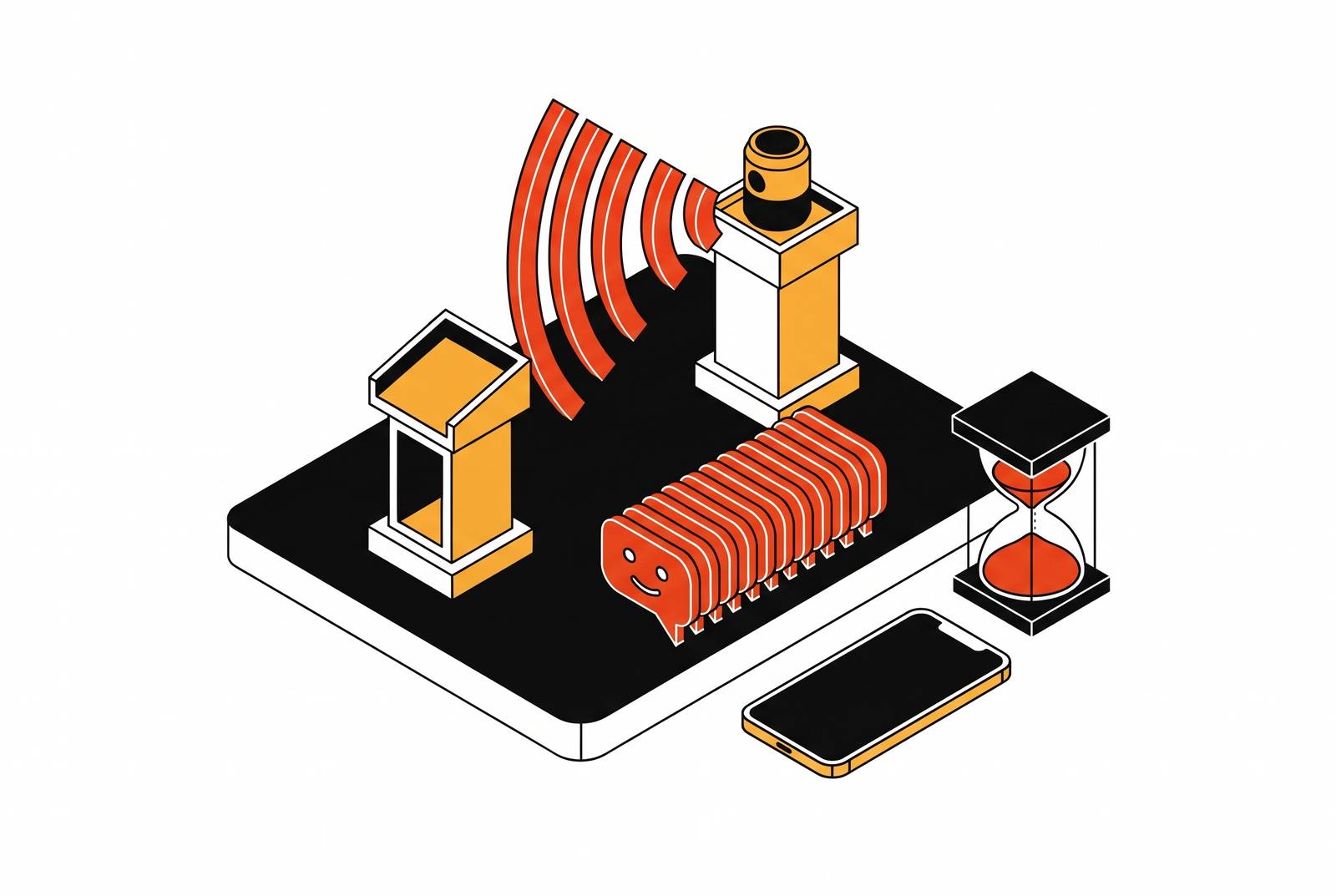
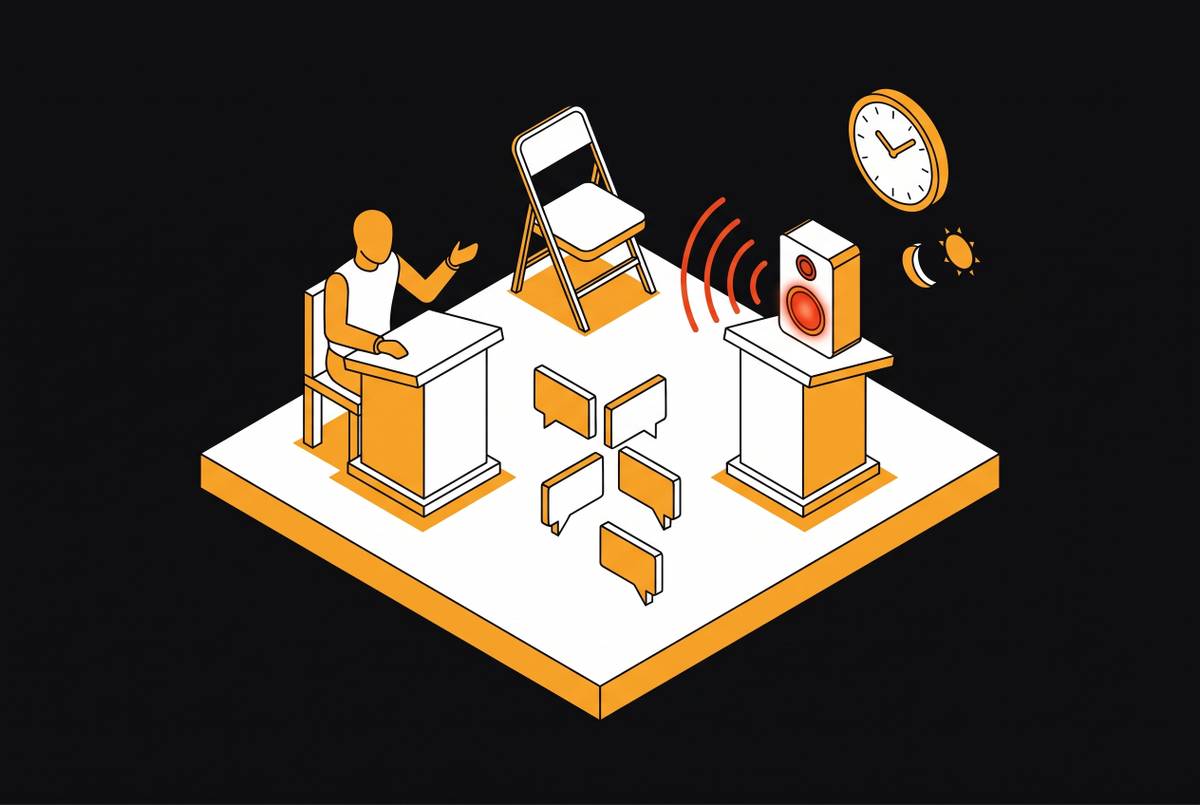
Daily argument training without a sparring partner needs a repeatable structure. Isolate one skill, deliver it aloud on a timer, and review feedback that judges what was actually said. A solo AI debate opponent or speech-feedback tool is useful when it closes that loop with transparent criteria, rather than merely supplying another argument to answer.
Why idle minutes stay idle: the structure problem, not the motivation problem
Reading notes and running a full round mentally feel like preparation, but neither produces spoken output that can be judged. The missing element is a repeatable drill structure. Without it, spare minutes become another pass through familiar material, while the delivery problems that need work remain unexposed. Repetition alone cannot distinguish sound mechanics from bad habits, so more practice can reinforce either.
WSDC Academy's practice guide recommends a full judged practice round every week or two for competitive debaters, with reasons given for the judgment. That creates a genuine sparring-partner bottleneck, but it need not govern every practice session. A score, a specific note, or a recording watched critically can provide feedback between rounds. The structure that makes those short sessions productive is learnable and fits into a daily routine.
What deliberate practice actually means for spoken argument
The academy's guide gives three conditions for practice that works. A drill must focus on one skill, have the speaker give a timed speech that can be judged, and give feedback. Each condition does a different job. Isolation makes the target clear, the timer makes performance observable under constraint, and feedback identifies what needs to change. A full round combines skills, but that breadth makes it less useful for isolating a particular weakness.
Spoken output is not an optional finishing step. The Debate Prep's solo routine guide notes that a case which fits on paper can run long when spoken. Silent rehearsal conceals pacing problems because it does not require the speaker to deliver every transition and explanation within the allotted time. A timer and a microphone expose that gap. They also make signposting available for review, rather than leaving the speaker to assume that the argument's structure was clear.
Regularity supports this narrow, observable form of practice. The same guide recommends two or three focused speech sessions a week, plus one round flowed, rather than a single long session before a tournament. The spacing effect supports spreading practice across shorter sessions instead of spending the same amount of time in one block. Speech skills consolidate between those sessions. Two shorter drills on Monday and Wednesday therefore offer a stronger basis for durable learning than saving the same total practice time for Sunday.
Five solo drills that each target a different argument skill
One-minute openings target framing, the decision about what the round is actually about. The academy's routine begins with a drawn motion and five minutes of preparation, followed by only the first minute of a first speech. The speaker then delivers that opening two more ways. The comparison is the exercise's central constraint. Three openings on the same motion make competing frames available for judgment, without allowing the rest of a speech to obscure the choice. A recording provides the material for deciding which opening establishes the strongest frame.
That narrow focus gives framing more attention than it usually receives in a full round. Framing is a high-leverage skill because it sets the terms on which the following arguments will be understood. The speaker must therefore distinguish between having something to say about a topic and giving the round a clear direction. The one-minute limit also exposes an opening that consumes time without establishing that direction.
Rebuttal reps target the quality of the answer to an opposing argument. The academy's guide asks the speaker to write the strongest argument possible for a side they disagree with, then stand up and dismantle it using the four-step structure in its rebuttal guide. The spoken response belongs on a timer. Rebutting the strongest version trains the habit judges reward, while rebutting a strawman leaves the substantive challenge untouched.
The refutation mirror drill targets perspective-switching as well as rebuttal. It asks the speaker to examine their own argument as an opponent would and find weaknesses they missed while building it. The recording supplies an important point of comparison. What the speaker intended to argue may differ from what the spoken version actually established. Within a timed, recorded session, that discrepancy becomes diagnostic feedback rather than a vague sense that the case could be stronger.
Shadow debate trains real-time rebuttal when time is short. Vancouver Debate Academy's drill guide recommends taking a speech from a recorded round, with WSDC finals as one source, and pausing after each argument to refute it aloud. Resuming the video then reveals the actual response. The comparison asks whether the solo response missed the key move, found something the recorded speaker missed, or offered the more offensive answer.
The time-pressure variant makes the response window progressively tighter. It starts with two minutes to respond, then reduces the available time as the drill continues. The constraint changes what must be practised. Producing a strong response is no longer enough if it cannot be delivered before the clock runs out. Comparing the spoken attempts with the recorded response tests how well the speaker rebuts as well as how fast they speak.
Flash drills target impromptu structure under surprise conditions. The same drill guide describes writing motions on slips of paper, drawing one, and immediately delivering a one-minute opening. With no time to prepare, the speaker must build the argument and give it a clear structure at once. A recording or transcript makes that attempt available for feedback afterward.
The academy's practice guide also provides access to a motion bank with real tournament motions and a draw-one button. That removes the friction of choosing a topic. It also keeps the flash drill repeatable without making topic selection part of the session. Across these five routines, the shared discipline is not the subject being debated but the narrow skill being tested through timed speech and review.
How to get feedback when no human judge is in the room
Recording and re-watching is the minimum viable feedback loop. Watching a recording closely with a notepad can reveal rushed impacts, missing signposting, pace problems, and filler words that were hard to catch while speaking. The recording alone does not complete the exercise. A transcript can support that review, while the recording preserves the delivery that silent text cannot show.
The Debate Prep's Speech Feedback feature marks up a transcript and measures pace and filler words. Those functions make particular delivery issues explicit rather than leaving them as a general impression that the speech felt rushed or unclear. They do a different job from giving the speaker an opposing case. For daily practice without a partner, that distinction is important because receiving an argument to answer does not establish whether the answer was effective.
AI feedback offers consistency when it applies the same rubric across drills and explains its scores against what was said. That is more actionable than an unanchored comment such as “good point.” Consistency is not the same as sound judgment, however. An AI judge can penalize an unconventional argument because it does not fit the template embedded in its rubric. Transparent, pre-published scoring criteria are therefore the standard for distinguishing useful feedback from unexplained evaluation.
A tool for arguing both sides must allow perspective-switching, while a tool for improving delivery must show how the speaker did. One score cannot show which of those jobs the tool did well. The useful criteria are judgeable spoken output, specific feedback, and a rubric visible before the exercise begins. Those criteria provide a firmer basis for selection than the broad promise of an AI debate opponent.
Matching the drill to what the last session exposed
Dropped arguments call for more flowing or shadow debate, because the speaker needs to track and answer what the opponent actually said. Running out of time points toward practice on the clock, including one-minute openings. If judges could not follow the speech, the target shifts to weighing and signposting. The skill that prevented the last performance from working should guide drill selection ahead of how long each drill has gone unused.
Practising layer drills and the refinement round helps with weighing and signposting. A layer drill develops a claim through its tagline, mechanism, impact, and weighing, making a thin part of the argument easier to identify. This adds precision to the diagnosis. A speech can contain a claim without sufficiently explaining how it works or why its consequences should determine the decision. Work on that missing layer is more targeted than repeating the entire speech unchanged.
The academy's weekly structure accommodates school or work through two brief weekday solo sessions, a thirty-minute Thursday partner session, and a weekend judged round or filmed speech reviewed with a notepad. The calendar is a flexible framework. When no partner is available, the reviewed speech preserves the feedback loop. When a tournament is four weeks away, the mix tilts toward full rounds, while a specific weakness exposed in the last round shifts attention back toward an isolating drill. The Debate Prep's progress pages show how the speaker improves from week to week, so there is less need to rely on memories of how earlier sessions felt.
When solo drilling is not enough: what a live opponent adds
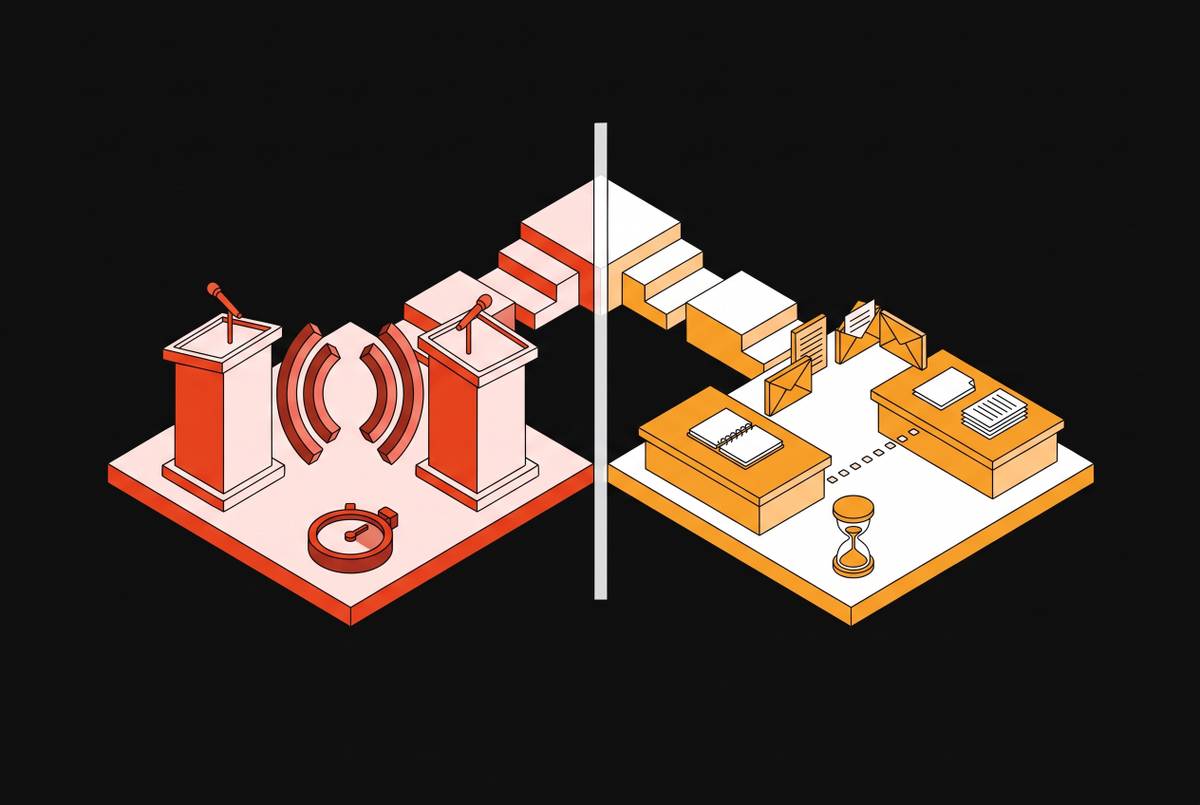
A live opponent integrates the components developed through solo practice. The added demands include composure under interruption, real-time weighing against an unfamiliar argument, and an adversary with a genuine incentive to expose weaknesses. Those demands build on the solo routine. A prepared rebuttal target or recorded speech can create a useful challenge, but it cannot reproduce the full pressure of an opponent responding to the exchange as it unfolds.
The academy's POI gauntlet isolates one part of that pressure. One debater delivers a prepared argument while a partner offers points of information at regular intervals. The speaker must answer quickly while keeping the argument on track. This tests more than the ability to produce an answer in isolation. It requires the answer to fit into a speech already in progress, while the speaker preserves its direction under interruption.
Moving into live practice does not require a team or club. Platforms that match users with opponents, run timed rounds with a set structure, and give scored verdicts can help speakers move from solo practice to live competition. The same transparency standard applies to their judgments. Scoring rules that are published, results that can be appealed, and platform earnings that do not depend on who wins give speakers ways to judge whether they can trust the feedback. Access to an opponent should not require accepting an opaque verdict.
The accessible next step is one live round. It extends the solo routine by testing trained skills against an opponent who can resist them, then supplies fresh evidence for the next focused session. That makes live debate a continuation of daily practice accessible even to speakers new to competition.